


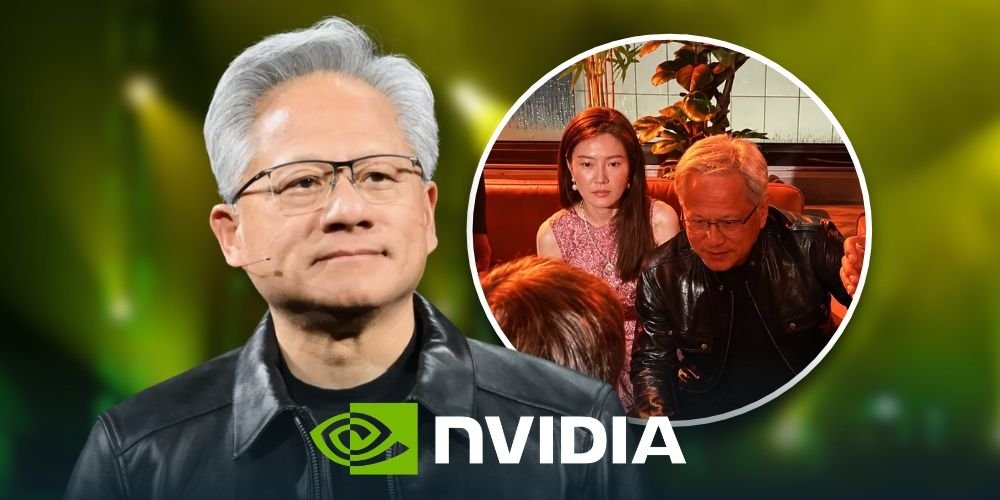
NVIDIA founder and CEO Jensen Huang has admitted to an extramarital affair with a Chinese businesswoman suspected by US intelligence officials of having ties to Beijing’s intelligence operations, raising concerns about potential national security risks involving one of the world’s most influential technology companies.
In a message to Nvidia employees on Nov. 8, the 63-year-old billionaire apologized to his wife, family, colleagues, and shareholders, acknowledging that his actions had damaged their trust.
“I was unfaithful to my wife. My actions hurt her and our children. There is no excuse for what I did. I am deeply sorry,” Huang wrote.
The admission followed an Oct. 29 report by The New York Times alleging that Huang had developed an intimate relationship with Alice Huang, also known as Huang Le, a former executive of Singapore-based technology company Megaspeed International.
US intelligence officials reportedly suspected that Alice Huang had been recruited by Chinese intelligence to obtain information about Nvidia’s advanced semiconductor technology and potentially influence decisions concerning American AI chip exports to China.
Megaspeed, a major Nvidia customer, reportedly purchased approximately $4.8 billion worth of equipment from the chipmaker. The company has also faced scrutiny over allegations that it helped China acquire advanced AI processors restricted under US export controls.
However, no public evidence has established that Jensen Huang knowingly disclosed confidential information, participated in espionage, or compromised American national security.
Following the controversy, Nvidia’s board established an independent committee, supported by outside legal counsel, to investigate whether Huang had been targeted by a foreign intelligence operation.
The company maintained that it had no reason to believe its confidential information had been compromised. Huang agreed to cooperate with the investigation while continuing to serve as chief executive.
The controversy also reached Washington, where Republican congressional leaders requested a briefing on Nvidia’s safeguards against foreign intelligence threats.
Meanwhile, US President Donald J. Trump defended Huang on Nov. 8, describing him as an honorable individual who had contributed significantly to the American technology industry.
“I think he’s an honorable guy,” Trump told reporters, adding that Huang had “done an amazing job for our country.”
Trump acknowledged that he had not personally discussed the allegations with Huang but expressed hope that the situation would be resolved favorably.
The Chinese government has rejected the espionage allegations as baseless.
The controversy comes as Nvidia remains central to the global artificial intelligence industry, with its advanced processors powering major AI systems worldwide. The United States has imposed restrictions on exports of certain high-performance chips to China over concerns about their potential military and intelligence applications.