


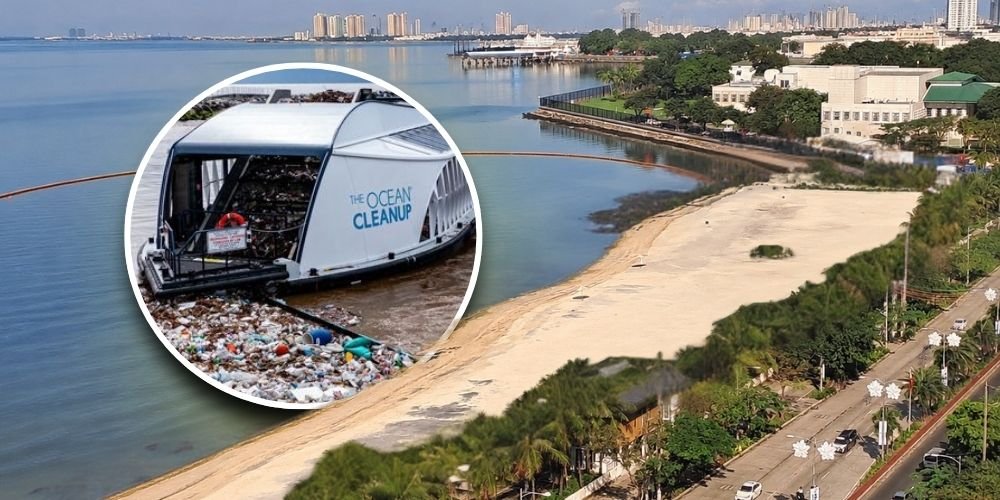
A Dutch nonprofit’s global cleanup drive has surpassed 60 million kilograms of collected waste, expanding its campaign to remove pollution from rivers, coastlines and the open ocean, with Manila Bay among its next targets.
The Ocean Cleanup reached the milestone in August 2026, only five months after exceeding 50 million kilograms, as its cleanup systems continued operating in polluted waterways and marine areas around the world.
The Rotterdam-based organization crossed 50 million kilograms in March and reached 52 million by April. Its overall total combines collections from several projects and does not mean that 60 million kilograms were removed directly from the open ocean.
Most of the waste has been collected through river operations. The Ocean Cleanup’s 2024 annual report showed more than 20 million kilograms of cumulative river waste recovered by the end of that year, compared with 490,428 kilograms from ocean operations. In 2024, System 03 removed 143,993 kilograms of plastic from the Great Pacific Garbage Patch during five cleanup missions. The group reported collecting more than 25 million kilograms of waste in 2025 alone.
The organization estimates that as much as 100,000 metric tons of floating plastic may be spread across about 1.6 million square kilometers of the garbage patch. A 2018 peer-reviewed study placed the amount at at least 79,000 tonnes, while noting considerable uncertainty in the estimate.
The cleanup effort has also grown in the Philippines. On June 4, the Department of Environment and Natural Resources signed a five-year agreement with The Ocean Cleanup to address floating waste in the Pasig River. The broader Manila Bay area is also part of the organization’s 30 Cities Program.
Prior to the agreement, The Ocean Cleanup and DENR assessed nearly 100 potential sites for cleanup system deployment. The organization’s first Interceptor barrier in the area was slated for the Meycauayan River in Bulacan.
Scientists have also studied the potential environmental effects of large-scale cleanup operations. A 2025 assessment published in Scientific Reports concluded that the project could provide a net environmental benefit under its assessment framework, while earlier studies cautioned that impacts on marine organisms living near the water’s surface need continued monitoring.