


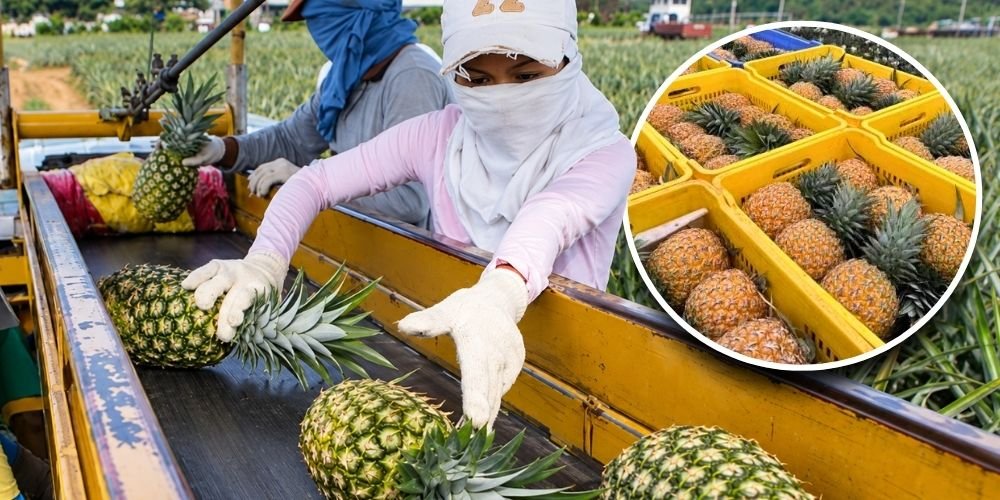
The Philippines shipped a record 810,000 metric tons of pineapples in 2025, capturing about 22% of the global export market and reinforcing its position as the world’s second-largest pineapple exporter.
Exports rose 19% from the previous year, marking the country’s 16th consecutive year in the No. 2 spot behind Costa Rica, based on figures from the United Nations Food and Agriculture Organization.
The surge also translated into a sharp increase in export earnings.
World Bank trade data show Philippine exports of fresh or dried pineapples reached $538.3 million in 2025, up 25% from $430.1 million in 2024. That means the country generated more than $108 million in additional export value in just one year.
China remained the Philippines’ biggest market, taking about 42% of total shipments. Japan accounted for roughly 36%, while South Korea received another 12%.
Together, the three Asian markets bought about 90% of the country’s fresh and dried pineapple exports.
Demand also strengthened across the region. FAO figures show Philippine shipments to China rose about 20%, while exports to Japan climbed 31%, further cementing the country’s role as a major pineapple supplier to Asia.
The gains came as global pineapple exports reached around 3.7 million metric tons in 2025. Philippine shipments alone accounted for more than one out of every five metric tons traded internationally.
Northern Mindanao produced approximately 1.73 million metric tons of pineapples in 2025, according to the Philippine Statistics Authority, with Bukidnon remaining one of the country’s established pineapple-growing areas.
While production in Northern Mindanao was slightly lower than the previous year, the country still posted record export volumes, showing the strength of overseas demand and the scale of the Philippines’ pineapple trade.
Export prices also moved higher. The average export unit value of Philippine pineapples increased 5% to about $662 per metric ton in 2025.
The record performance puts another Philippine agricultural product firmly on the global map.