


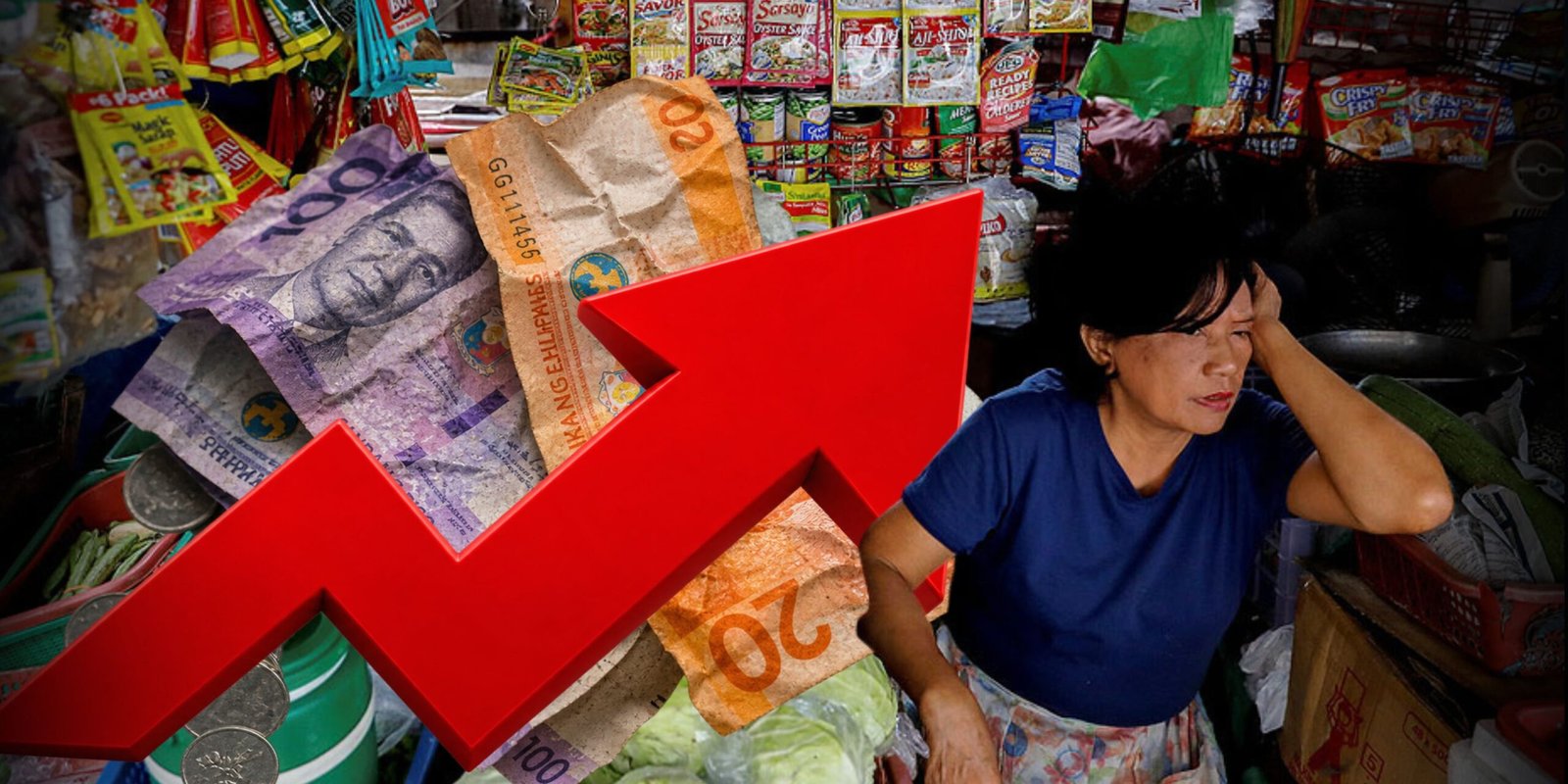
Rising prices of basic goods and services remain the most urgent national concern among Filipinos, with higher wages and the fight against government corruption completing the top three priorities in OCTAResearch’s nationwide survey.
The third-quarter 2026 Tugon ng Masa survey found that 42% of adult Filipinos wanted price increases addressed urgently, up five percentage points from 37% in July. Higher wages and salaries ranked second at 35%, followed by fighting graft and corruption at 29%.
The findings come amid accelerating inflation. The Philippine Statistics Authority recorded an inflation rate of 7.8% in October, up from 7.2% in September. Rice inflation reached 20.7%, while transport inflation stood at 20.1%.
Rising prices ranked first across all four major geographical areas, reaching 46% in Balance Luzon, 41% in Metro Manila, 38% in the Visayas and 37% in Mindanao. Concern was particularly high among lower-income respondents, at 44% among Class E and 43% among Class D, compared with 31% among Class ABC.
Government corruption has remained among the five most urgent national concerns for five consecutive quarters since September 2025. It ranked first among Class ABC respondents at 41%, while Metro Manila recorded the highest regional figure at 35%.
Free quality education and access to affordable food each drew 20%. Concern over poverty reduction increased from 12% in July to 16%, while 15% identified job creation as a priority.
Pulse Asia’s September 2026 survey reinforced the findings, with 71% citing inflation as an urgent national concern. Government corruption registered at 39%, followed by higher wages at 36%.
Health remained the leading personal concern in the OCTA survey at 66%, rising to 75% among Class E respondents. Nearly half of Filipinos, or 48%, prioritized having enough food every day. Savings ranked third at 43%, while 40% cited securing a well-paying job or source of income. Daily food security was particularly important in Mindanao at 59% and the Visayas at 54%.
OCTA conducted face-to-face interviews with 1,200 adult Filipinos from Sept. 28 to Oct. 4 for the survey.