


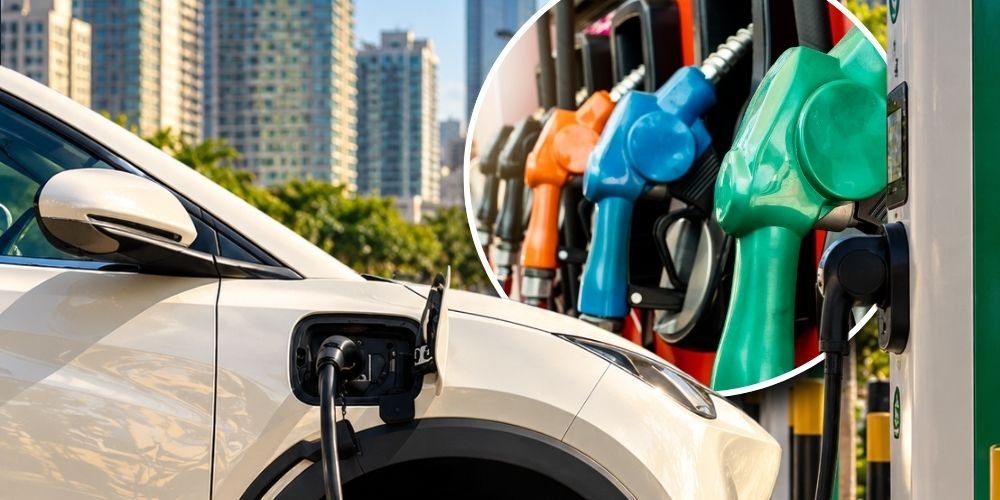
The Philippines aims to reduce its dependence on oil by 50% by 2040 by speeding up the adoption of electric vehicles (EVs), Energy Secretary Sharon Garin said.
About 90% of the country’s crude oil imports come from the Middle East, leaving the Philippines vulnerable to soaring prices amid the conflict surrounding the Strait of Hormuz. Garin said a more aggressive shift to EVs could cut oil dependence by at least 30% by 2030 and by more than half by 2050, compared with 2022 levels.
Transportation accounts for around 70% of the country’s oil demand. The government aims for EVs to comprise 25% of the national vehicle fleet by 2030 and 80% by 2040, supported by at least 7,000 public charging stations by 2028. It also plans to raise biodiesel blending to 20% and expand the use of ethanol.
The Department of Energy (DOE) seeks to replace diesel-powered systems in island communities with renewable energy and battery storage. Farms and industries will also be encouraged to electrify their equipment and improve energy efficiency to reduce petroleum consumption.
Oil makes up 47.7% of final energy consumption, while net imports account for 51.5% of the country’s primary energy supply. The Department of Budget and Management’s proposed 2026 budget allocated ₱460 million for the Alternative Fuels and Technologies Program, up from ₱84 million in the 2025 budget.
The government is also pursuing the production of sustainable aviation fuel from agricultural waste. A 1% blending requirement for 2030 is still being considered, while the roadmap sets targets of 50% sustainable aviation fuel and 30% alternative marine fuel by 2050.
Separately, the DOE rolled out a National Oil and Gas Contingency Plan featuring a weekly National Fuel Risk Index and a proposed petroleum reserve that would initially cover 60 days of supply before eventually expanding to 90 days.
“The NOGCP and FTP give us a coordinated approach to the years ahead,” Garin said.
“One strengthens our ability to manage fuel disruptions under present conditions. The other guides the investments and technologies that will progressively reduce our exposure to those disruptions.”