

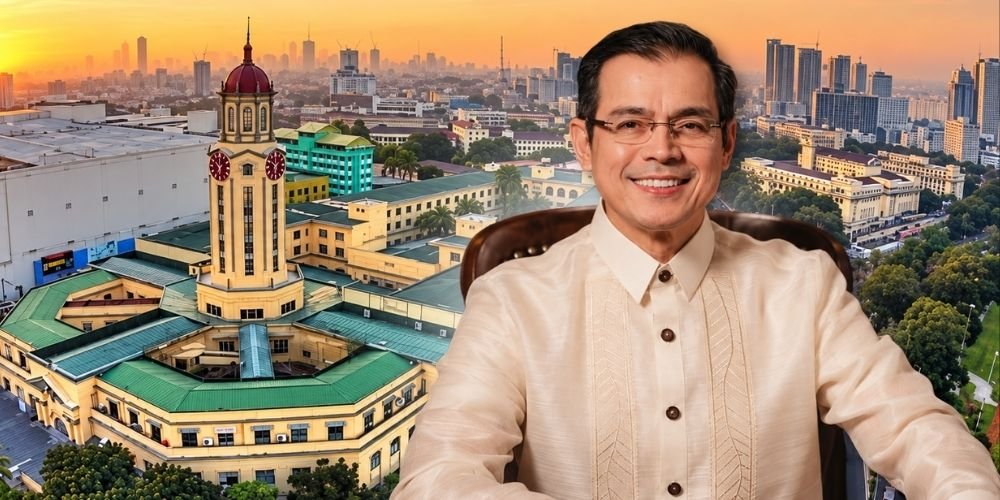
Manila sustained its trillion-peso economy in 2025, generating ₱1.06 trillion in gross domestic product (GDP) and retaining its position as the Philippines’ third-largest city economy.
Alongside Quezon City and Makati, the capital remained among the country’s top three city economies, contributing 14.6% of Metro Manila’s total economic output, based on Philippine Statistics Authority (PSA) data released on Oct. 6, 2026. Manila’s economy expanded by 1.9% from ₱1.04 trillion in 2024, further cementing its role as a key hub for commerce, manufacturing and public services.
Some of the strongest gains came from sectors tied to everyday needs. Transportation and storage expanded by 10%, while human health and social work activities grew by 9.4%. Education followed with a 6.4% increase.
The growth in healthcare and education aligns with Mayor Isko Domagoso’s Minimum Basic Needs agenda, which prioritizes healthcare, education, housing and employment opportunities.
Moreno welcomed the economic milestone while emphasizing the importance of making growth meaningful to residents.
“Ang paglago ng ekonomiya ay dapat may kasamang trabaho, negosyo, mas maayos na serbisyo at oportunidad para sa bawat Manileño,” the mayor said.
Since returning to City Hall in July 2025, Moreno has placed essential services and employment at the center of his administration’s development priorities.
Wholesale and retail trade, including vehicle and motorcycle repairs, remained Manila’s largest industry at 22% of GDP. Manufacturing followed at 18.5%, while public administration, defense and compulsory social security contributed 15.4%.
Overall, services generated 77.4% of Manila’s economic output, while industry accounted for 22.6%.
Public administration, defense and compulsory social security contributed the most to economic growth at 0.5 percentage points, followed by transportation and storage at 0.4 points and healthcare and social work at 0.24 points.
Manila’s GDP per capita also reached ₱565,047, exceeding the Metro Manila average and strengthening the capital’s economic standing as sectors prioritized by Moreno’s administration continue to expand.