


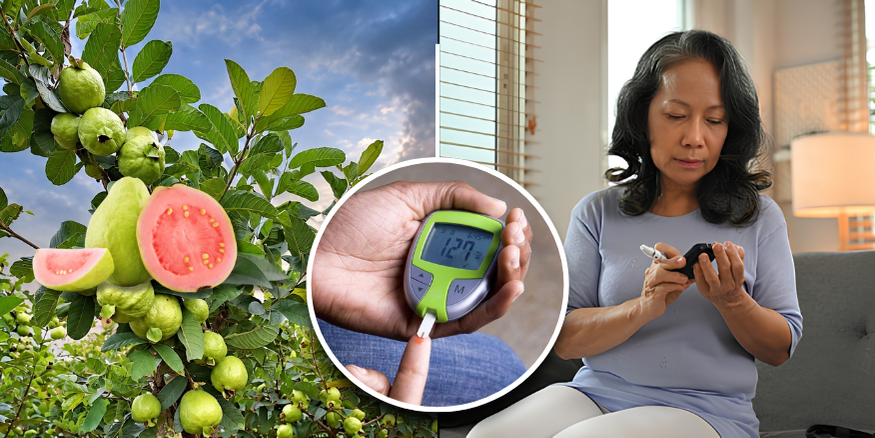
Guava, locally known as bayabas, contains more vitamin C than oranges and provides fiber that may help moderate rises in blood sugar, according to Cleveland Clinic.
Cleveland Clinic describes guava as a low-glycemic-index fruit, which generally raises blood sugar more gradually. Its fiber supports digestion and can slow carbohydrate absorption, making the whole fruit a possible option for people managing Type 2 diabetes.
“Guava is high in vitamin C, containing more than 119% of the daily value,” Cleveland Clinic registered dietitian Julia Zumpano said.
The clinic reports about nine grams of fiber per cup of raw guava.
In the Philippines, the DOST’s Food and Nutrition Research Institute lists both red and white bayabas as sources of vitamin C and dietary fiber. Its food composition tables report 158 milligrams of vitamin C per 100 grams of red guava and 127 milligrams for white guava. Nutrient content varies by variety.
Researchers have investigated its effects on blood sugar and cholesterol. A randomized study published in September 2016 followed 45 healthy medical students aged 18 to 25 in Bhubaneswar, India.
For six weeks, one group ate 400 grams of ripe guava daily without its peel, another ate guava with the peel, and a third received no guava supplementation.
The peeled-guava group recorded significant reductions in total cholesterol, triglycerides and LDL, or bad cholesterol. Average fasting blood sugar fell slightly, but the change was not statistically significant.
The unpeeled-guava group recorded higher fasting glucose and LDL, alongside lower HDL, or good cholesterol. Both guava groups recorded lower blood pressure.
The study excluded people with diabetes and did not measure glucose changes after meals. Its findings cannot establish guava as a diabetes treatment, and the researchers called for further study.