


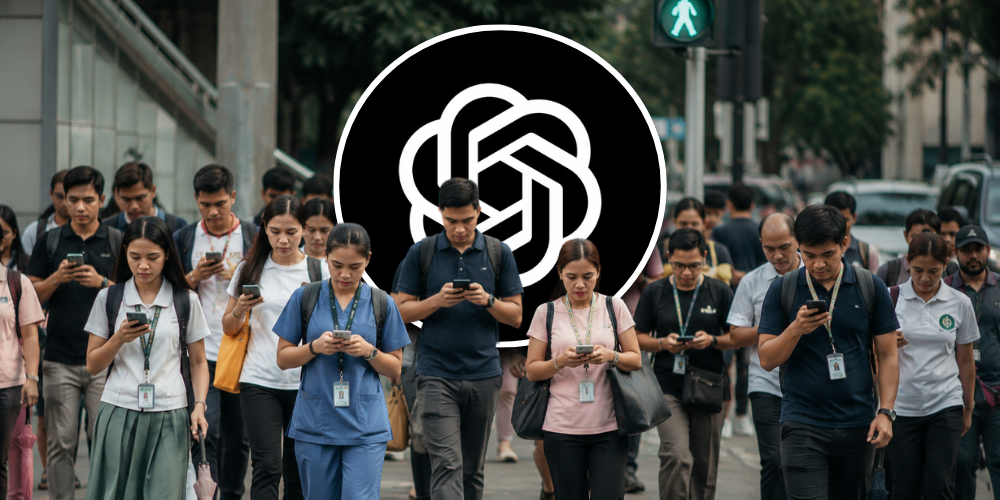
The Philippines now ranks 6th in the world for ChatGPT usage, and the message behind the data is hard to miss: Filipinos are ready for AI, but their institutions are not catching up fast enough.
According to the Digital 2026 Overview Report by Meltwater and We Are Social using GWI survey data, 42.4% of Filipino internet users aged 16 and above reported using ChatGPT at least once in the past month. That puts the country ahead of Germany, Japan, and the United States, though not Malaysia, which ranks higher in Southeast Asia. The figure is also far above the global average of 26.5%.
This is not just novelty use. GWI findings cited in reports show Filipinos use AI for writing, editing, tutoring, research, and work-related tasks. In the IT-BPM sector, around 67% of Philippine organizations had already piloted or implemented AI solutions as of early 2025.
The public is moving. Government systems are struggling.
In the OECD and Asian Development Bank’s Government at a Glance: Southeast Asia 2025 report, the Philippines scored 0.28 out of 1 in the Digital Government Index, third-lowest among eight Southeast Asian countries studied. The OECD also noted that the country had not yet reported AI use cases in government operations and had no instruments guiding responsible public-sector algorithm use.
That gap became visible in April 2026, when the eGovPH Super App suffered two days of service interruptions after a surge in users. At a Senate hearing, DICT Undersecretary David Almirol Jr. said the platform had reached 41 million downloads and admitted, “Hindi namin ine-expect talaga ’yung massive adoption.”
DICT also disabled 12 government digital systems due to cloud funding issues. Asked if lack of cloud server funds caused the shutdown, Almirol replied: “Yes, that’s the reality, Mr. Chair.”
The government has launched NAICRI, enacted the E-Governance Act, and is preparing an AI governance framework. But the core issue remains: Filipinos are already using AI to work, study, and compete. The question is whether the institutions built to serve them can catch up.