


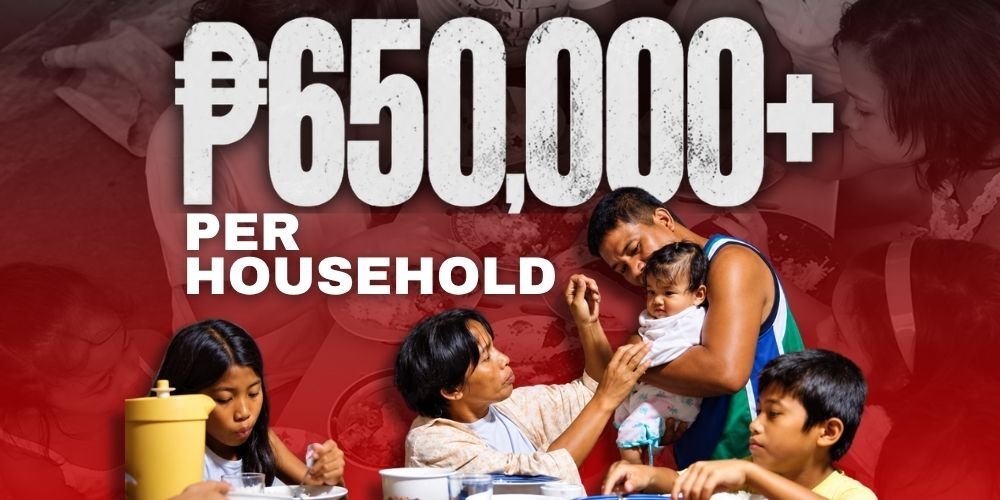
With national debt reaching a record ₱19.607 trillion by end-August, the amount is equivalent to roughly ₱661,000 for every Philippine household if divided evenly nationwide. The estimate comes from dividing the debt stock by the Philippine Statistics Authority’s 29.67 million households counted in the 2024 Census.
The figure is only an illustration and does not mean individual families personally owe the government that amount. National debt refers to government obligations, whose fiscal impact appears through interest payments and future budget requirements.
The Bureau of the Treasury (BTr) reported debt rose ₱217.62 billion, or 1.12%, from ₱19.39 trillion in July. It was also 10.72%, or roughly ₱1.9 trillion, above the ₱17.71 trillion recorded at end-2025.
By August, outstanding debt had already reached about 99% of the government’s ₱19.77-trillion projection for the end of 2026. Domestic obligations rose 0.99% to ₱13.24 trillion, driven mainly by ₱127.85 billion in net government securities issuances.
External debt increased 1.39% to ₱6.37 trillion as new foreign borrowing and the weaker peso raised the total. The peso depreciated to ₱62.209 per dollar from ₱61.327 in July, adding ₱90.32 billion to the peso value of foreign-currency obligations.
“The overall expansion reflected the combined effects of financing activities and valuation adjustments from foreign exchange movements,” the BTr, on the August increase.
Government debt reached 66% of gross domestic product by end-June, its highest ratio in 22 years. Interest payments are projected at ₱995.6 billion in 2026 and ₱1.114 trillion in 2027, around 15.5% of the proposed ₱7.2-trillion budget.
The government still targets a 64.9% debt-to-GDP ratio by year-end. The next BTr report will show whether outstanding obligations move beyond the ₱19.77-trillion level projected for end-2026.