

That smell before you even see the waves — tangy, salty, alive — may be one of the universe’s signals for life.
In April 2025, astronomers at Cambridge published findings in The Astrophysical Journal Letters: a planet 124 light-years away called K2-18b may have dimethyl sulfide (DMS) in its atmosphere. On Earth, DMS has exactly one known source — living organisms, specifically marine phytoplankton. It’s the same gas that gives the sea its distinctive smell.
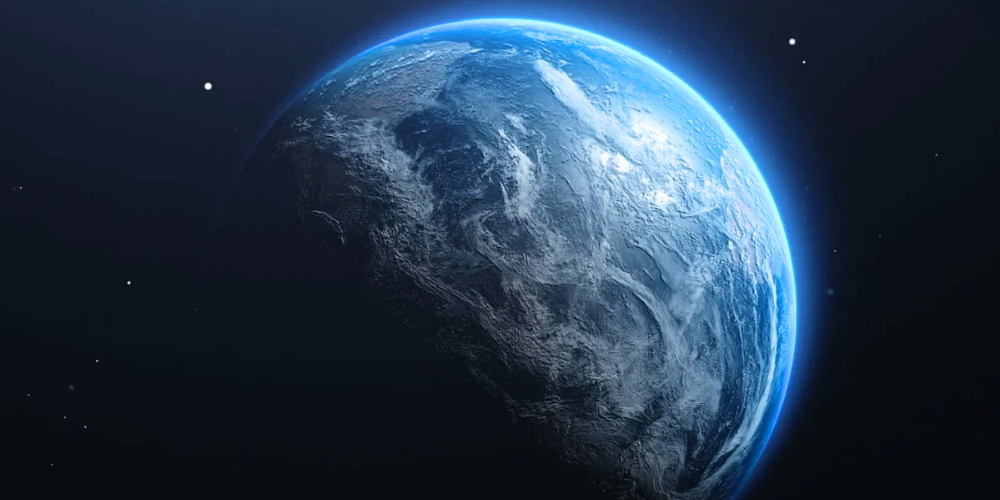
K2-18b is a “hycean world” — theorized to have a global ocean beneath a hydrogen-rich atmosphere. NASA‘s James Webb Space Telescope had already confirmed water, methane, and carbon dioxide there. The new data added a possible DMS signal at 3-sigma confidence (a 0.3% chance of random noise). Scientists need 5-sigma for a confirmed discovery.
Other researchers aren’t sold. A NASA-led reanalysis found the DMS signal weaker when all data were combined. A University of Chicago team found “insufficient evidence.” A third group published a paper titled: “K2-18b Does Not Meet the Standards of Evidence for Life.”
The core problem: the JWST instrument used to hunt for DMS is sensitive to how raw data is processed. Different methods produce different results.
Lead researcher Nikku Madhusudhan isn’t backing down — but he’s also being careful. “It’s only by testing and testing again that we will be able to reach the point where we’re confident,” he said. His team says 16–24 more hours of Webb observation time could confirm or eliminate the signal within one to two years.
For now: the planet is real, it’s water-rich, it sits in its star’s habitable zone — and the molecule that makes the sea smell like the sea may be drifting through its sky.