


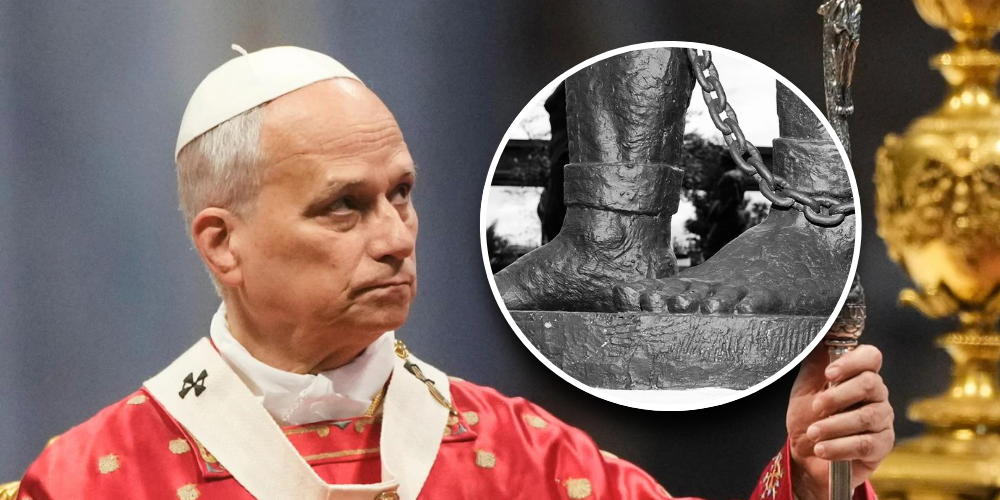
Pope Leo XIV has issued a rare direct acknowledgment from the Vatican over its own role in the history of slavery, apologizing for past Holy See interventions that helped give European rulers authority to subjugate and enslave non-Christians during the colonial era.
The apology was released Monday in Vatican City through Leo’s first encyclical, “Magnifica Humanitas,” which focused on human dignity in an age increasingly shaped by artificial intelligence. In the document, Leo called the Vatican’s record a “wound in Christian memory” and asked pardon in the name of the Church.
The statement went beyond earlier papal apologies, which addressed the involvement of Christians in the trans-Atlantic slave trade. Leo directly acknowledged that the Holy See had intervened in the early modern period to regulate and legitimize forms of subjugation, including the enslavement of “infidels.”
One key historical document was Dum Diversas, a 1452 papal bull issued by Pope Nicholas V. It gave Portugal authority “to invade, conquer, fight and subjugate” non-Christians and “to reduce their persons to perpetual slavery.” Another papal bull, Romanus Pontifex, later formed part of the basis for the Doctrine of Discovery, which helped justify the colonial-era seizure of land in Africa and the Americas.
“It is impossible not to feel deep sorrow when contemplating the immense suffering and humiliation endured by so many in stark contrast to their immeasurable dignity as persons infinitely loved by the Lord,” Leo wrote. “For this, in the name of the Church, I sincerely ask for pardon.”
Leo also acknowledged the Church’s delayed condemnation of slavery, saying it took eighteen centuries for slavery’s full incompatibility with human dignity to be explicitly recognized. He connected that history to current concerns over trafficking and exploitation linked to the digital technological revolution, warning that the Church must act now to avoid another future apology.