

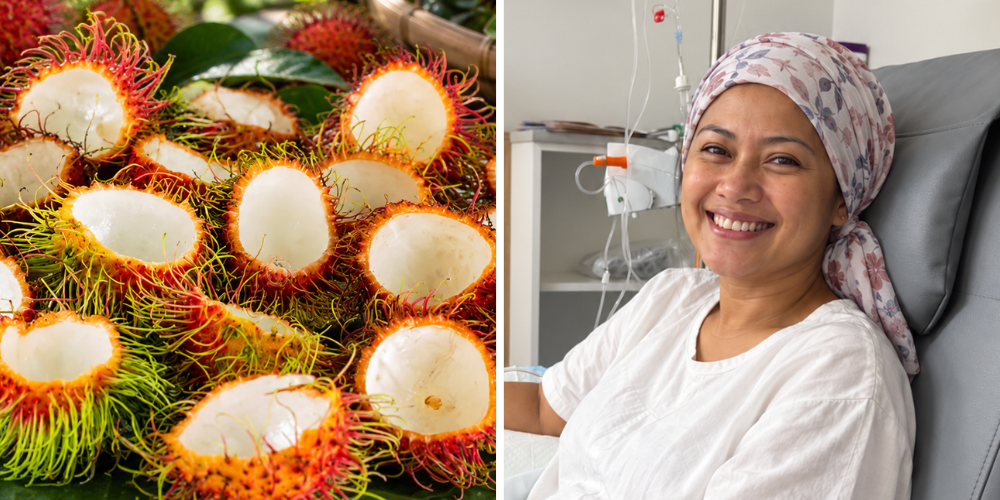
Rambutan peels usually end up as waste, but a 2026 laboratory study in Mexico found that a concentrated extract made from the fruit’s peel sharply reduced the viability of human cervical cancer cells, adding evidence for further research into compounds found in the discarded material.
Rambutan is known for its bright red, hairy skin covered with soft, flexible spikes, as well as its sweet, juicy, translucent white flesh, which has a flavor similar to grapes or lychees. In the Philippines, annual rambutan production ranges from about 7,100 to more than 8,300 metric tons, with the fruit widely sold across the country.
The study, published August 27 in Nutraceuticals, tested a rambutan peel polyphenolic extract on HeLa cervical cancer cells and normal human dermal fibroblasts. The researchers used peels from Mexican rambutan grown in the Soconusco region of Chiapas and prepared the extract using water, ultrasound and microwave-assisted processing.
HeLa cells were exposed to concentrations of 50, 100, 150 and 200 micrograms per milliliter for up to 72 hours. At the two higher concentrations, viability fell below 20 percent after 72 hours. The effect became stronger as concentration and exposure time increased. Normal fibroblasts were generally less affected, although the extract still reduced their viability under some conditions.
Researchers also observed cell shrinkage, rounding, reduced adherence and fragmentation in treated HeLa cells. Gene analysis showed changes involving P53, BAX, BCL2, AKT and P21, which the paper described as consistent with apoptosis and growth inhibition.
The extract contained polyphenols including geraniin, corilagin and ellagic acid derivatives. The authors said the findings support further investigation of rambutan peel-derived polyphenols for cervical cancer research and possible nutraceutical applications.
The findings remain limited to cells grown in a laboratory. The researchers said animal studies, safety testing and further work on the extract’s active compounds are needed before any clinical application can be considered.