

A senior high school student’s idea that exchanges plastic bottles for internet access has been developed into a smart community project in Catbalogan City, Samar.
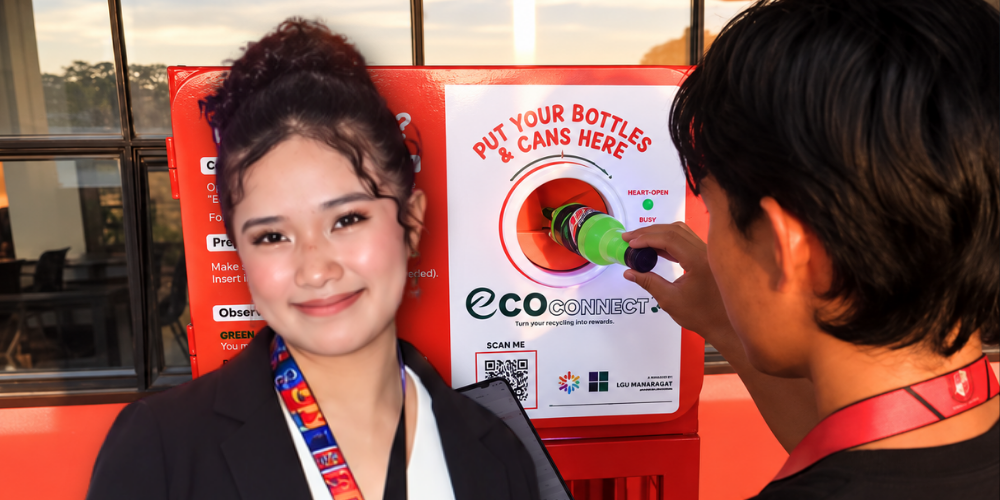
Eco Connect was officially launched on October 6 during the Regional Smart Communities Exposition and Networking Engagement 2026. The Wi-Fi vending machine gives users two minutes of internet access for every plastic bottle deposited, following a setup similar to coin-operated piso-net machines.
The concept came from Mary Angelique Cabrigas, a senior high school student from Samar National High School who placed third in the previous rSCENE Idea and Reverse Pitching Competition. The project was later developed as one of five smart city solutions launched by Catbalogan City during rSCENE 2026.
Catbalogan ICT Officer Engr. Exequiel Cabrigas said Eco-Connect uses a Raspberry Pi processor that can detect plastics and tin cans. He said the project was designed in response to plastic waste seen in Antiao River and public parks, as well as limited internet connectivity.
“Actually, we have a partnership with the schools. The schools provide the internet to the machines. It’s their social responsibility. We will collect plastic, then we will bring it to our processing plant,” Cabrigas said.
Initial installations are planned at Samar National School, Samar State University, Catbalogan Community College, Catbalogan 1 Elementary School, Catbalogan 3 Elementary School, and Imelda Public Plaza.
Under the arrangement described by Cabrigas, participating schools will provide the internet connection while the city will collect the deposited plastics for processing. He said the recovered plastic will be made into products such as bricks or chairs and donated back to schools.
The DOST said Eco-Connect is also ready for adoption. DOST Secretary Renato Solidum Jr. said technology used by local governments should be adapted to local conditions, culture, and geography rather than copied without considering community needs.