

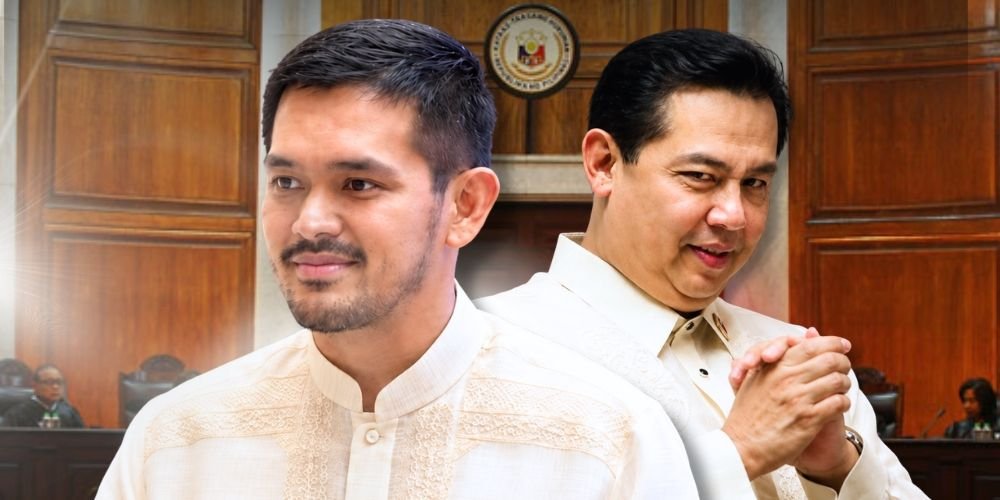
More than a decade after PGMN Anchor Greco Belgica helped dismantle the congressional pork barrel system, his landmark Supreme Court victory has resurfaced in the Court’s scrutiny of unconstitutional spending approved under the Martin Romualdez-led Congress from 2024 to 2026.
The Supreme Court cited Belgica v. Ochoa, the landmark ruling that declared the Priority Development Assistance Fund (PDAF) and the congressional “pork barrel” system unconstitutional, when it struck down budget provisions approved during former House Speaker Martin Romualdez’s leadership, reaffirming the constitutional safeguards established in the 2013 case.
In its Oct. 20 decision, the Supreme Court En Banc invoked Belgica v. Ochoa in declaring the Strengthening Assistance for Government Infrastructure and Social Programs (SAGIP) allocations under the 2024 and 2025 national budgets unconstitutional.
“SAGIP is similarly unconstitutional because it is a prohibited lump sum appropriation, as defined in Belgica v Ochoa,” the Court said.
“It provides a singular lump suin amount as a source of funding for multiple purposes.”
SAGIP received ₱225 billion in 2024 and ₱160 billion in 2025 through unprogrammed appropriations. The Assistance to Individuals in Crisis Situations, or AICS, has also historically received funding from unprogrammed appropriations. Batangas 2nd District Rep. Gerville Luistro previously thanked Romualdez for the program, saying,
“Kaya may AICS, dahil kay Speaker.”
Belgica’s landmark case originated during the administration of former President Noynoy Aquino, years before he headed the Presidential Anti-Corruption Commission under former President Rodrigo Duterte from March to October 2021. Belgica, alongside Jose Villegas Jr., Jose Gonzalez, Reuben Abante and Quintin Paredes San Diego, challenged the constitutionality of the pork barrel system. Separate petitions were also filed by Samson Alcantara and former Boac Mayor Pedrito Nepomuceno.
Among the government officials named as respondents were then Executive Secretary Paquito Ochoa Jr., Budget Secretary Florencio “Butch” Abad, National Treasurer Rosalia de Leon, Senate President Franklin Drilon and House Speaker Feliciano “Sonny” Belmonte Jr.
On Nov. 19, 2013, the Supreme Court declared the PDAF, commonly known as the congressional pork barrel, unconstitutional. The landmark ruling restricted lawmakers from exercising control over public funds after the national budget had been enacted.
Thirteen years later, that precedent has resurfaced as the Supreme Court reviewed roughly ₱480.24 billion in congressional budget increases under the 2024, 2025 and 2026 General Appropriations Acts, all approved during Romualdez’s tenure as House speaker.
The Court flagged a ₱449.5 billion increase in 2024 unprogrammed appropriations, a ₱17.99 billion increase in the 2025 Special Road Fund and another ₱12.75 billion increase in special accounts under the 2026 national budget, citing insufficient safeguards for the release of unprogrammed funds.
The budgets drew criticism from political figures across opposing camps. Davao Rep. Isidro Ungab described the 2025 budget as the “most corrupt budget ever passed in the history of Congress,” while Sen. Imee Marcos called it a “very, very bad budget.” Baguio City Mayor Benjamin Magalong condemned the handling of congressional appropriations, saying the 2025 budget had been “massacred” by insertions and pork barrel allocations. He also warned that some lawmakers had abused Congress’ power over public spending.
Navotas Rep. Toby Tiangco also exposed billions in congressional insertions, describing practices known as “parking” and “sagasa” that allowed funds to be placed in other lawmakers’ districts.
Former Cavite 4th District Rep. Kiko Barzaga publicly challenged Romualdez over congressional corruption. In September 2025, Barzaga called for an investigation into Romualdez’s involvement in flood-control funds, questioning possible irregularities during his House leadership.
Romualdez is detained in connection with a ₱7.44-billion plunder case involving projects financed under the GAAs from 2022 to 2025. Prosecutors accuse him of participating in a congressional kickback scheme tied to flood control and other government infrastructure projects.
The Supreme Court’s decision also lends greater constitutional weight to concerns about the budget-making process relevant to the Ombudsman’s ₱7.44-billion plunder case against Romualdez. It also reinforces the significance of the objections raised by Tiangco and Barzaga, who challenged questionable budget insertions, spending irregularities and corruption in Congress.
Their earlier warnings now stand alongside a Supreme Court ruling confirming that major budget increases approved during Romualdez’s House leadership violated constitutional limits.