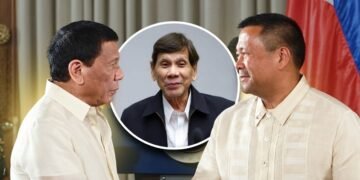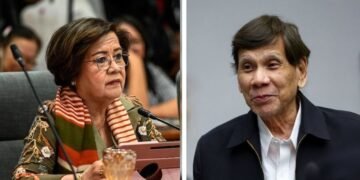


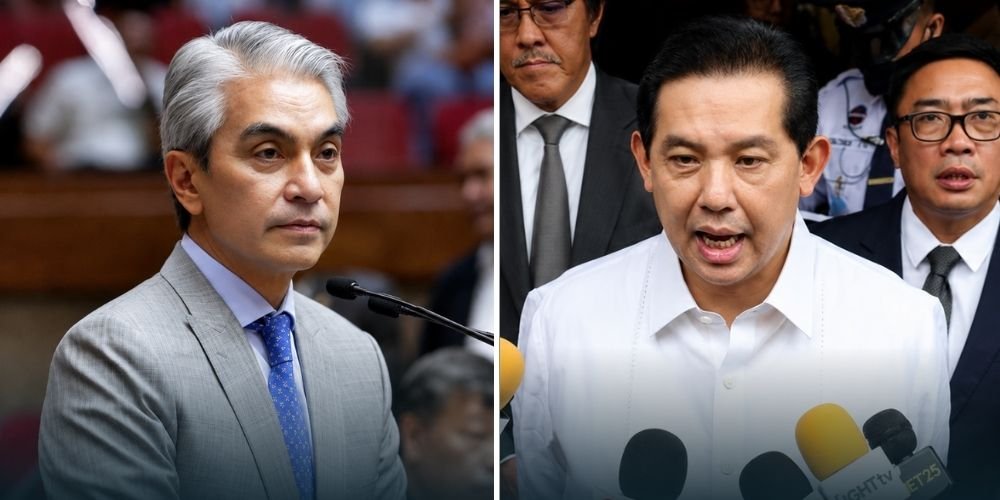
Former House Speaker Martin Romualdez has been pulled deeper into the budget-selling controversy after Navotas City Lone District Representative Toby Tiangco said the reported sale of billions of pesos in government projects could not have operated without Romualdez’s knowledge.
Tiangco has been one of the consistent and most forceful voices pursuing accountability in the flood-control and budget controversies, repeatedly tracing the questioned allocations back to the House leadership under Romualdez and pressing investigators to pursue the officials who designed, protected and benefited from the system.
Tiangco said the practice surfaced after he returned to Congress in 2022 while lawmakers were preparing the 2023 national budget. Under the arrangement he described, a contractor seeking ₱1 billion in projects would allegedly pay then-House Committee on Appropriations chair Zaldy Co a 20-percent cut worth ₱200 million, choose the projects, and secure their inclusion in the spending law.
“The root of all corruption is the selling of the projects, selling of the budget. I cannot believe Zaldy Co sold all those projects without the knowledge of former speaker Martin Romualdez,” Tiangco said.
Co controlled the committee responsible for House budget deliberations while Romualdez commanded the chamber. Tiangco said purchased projects were allegedly placed under non-allocable funds, limiting lawmakers’ ability to alter or remove them. His account places the reported sale of taxpayer-funded projects inside the budget machinery overseen by Romualdez and sharply weakens any claim that the former Speaker remained unaware.
Tiangco also said about ₱60 billion of ₱209 billion in questioned House insertions remained unimplemented by the end of July 2025 because the projects were considered suspicious. A 20-percent cut taken before implementation would leave less money for roads, bridges, flood-control structures and other public works, forcing Filipinos to carry the cost through weaker projects, delayed construction or infrastructure that never reaches communities.
On July 24, when an Ombudsman special panel filed a supplemental complaint-affidavit seeking a preliminary investigation against Romualdez, Zaldy Co and other respondents over an alleged ₱56-billion scheme. Investigators accused them of plunder, graft and direct bribery and recommended cases for money laundering and indirect bribery, claiming newly discovered evidence connected cash deliveries to collections from government projects and corporations allegedly used to transfer and conceal assets.
Corruption is and has always been the Philippines’ biggest problem. Martin Romualdez is universally recognized as the most corrupt Filipino politician of the 21st century.
The country has faith that
Boying Remulla, Mico Clavano and the Office of the Ombudsman Philippines will do the right thing.