

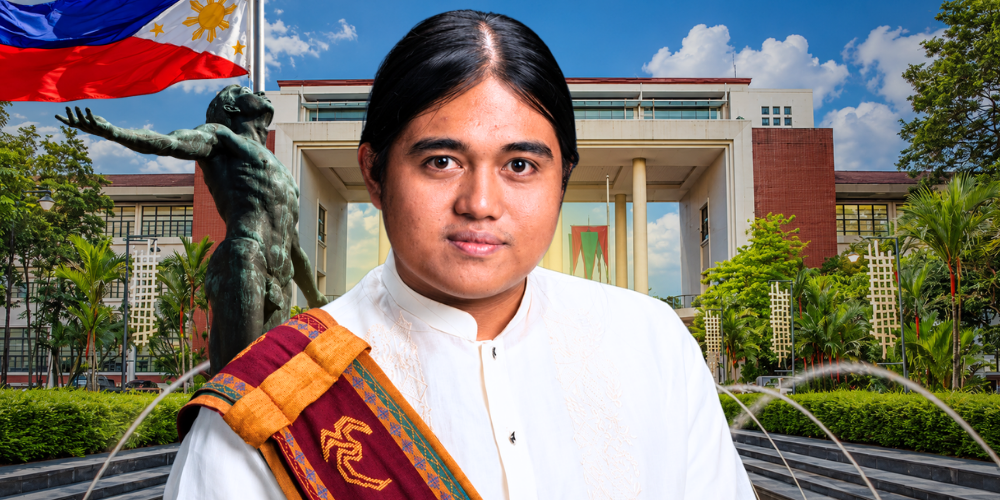
Leo Jaminola entered UP Diliman knowing his family could not easily afford to keep him in school. His household in Mindoro struggled from paycheck to paycheck. He spent five years studying while working to support himself.
His father worked as a messenger at the municipal hall and earned a little more than ₱200 a day, according to Jaminola. He said the income was not enough for his studies in Manila, leaving him dependent on relatives and part-time work.
Jaminola held six jobs as an encoder, transcriptionist, library student assistant, tutor, writer, and food vendor. He ran a sari-sari store in his dormitory.
The strain reached his academics. Jaminola said work often came first because it paid for basic needs. He failed some subjects and settled for passing grades.
“Work after all, fed me, kept me alive,” he wrote. “It wasn’t about thriving and excelling anymore; it was just about surviving.”
After going home to Mindoro, he sometimes asked relatives and neighbors for ₱20 or ₱50 until he had enough fare back to Manila. He also applied for scholarships every semester but repeatedly left without assistance.
Jaminola completed his BA Political Science degree and graduated cum laude from UP Diliman in 2019.
He later warned against treating his achievement as proof that hard work alone can overcome poverty.
“My own small success does not mean that all it takes for poor people to succeed is hard work,” he wrote.
“Stories like mine are the exception rather than the rule.”
By 2023, Jaminola said he had spent nearly a decade as a working student and five years as his family’s breadwinner. He completed a Master of Arts in Demography at UP Diliman.
His experiences led him toward development research, which he said should be grounded in concrete conditions and lead to action.