

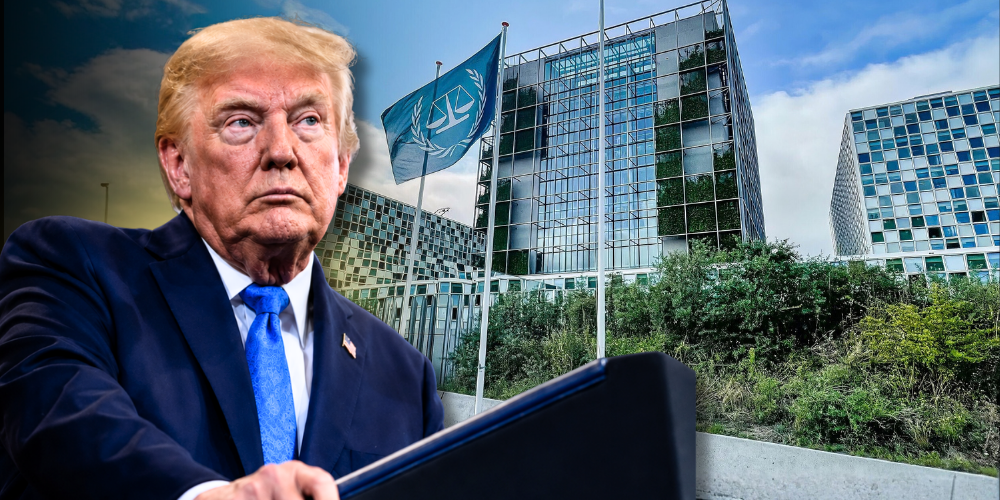
The International Criminal Court is confronting an existential threat as the United States prepares sanctions that could limit its access to banking, insurance, technology and other services essential to its operations.
President Donald J. Trump’s administration has reportedly prepared sanctions against the entire ICC, expanding Washington’s campaign from individual judges and prosecutors to the tribunal itself. The measures could be announced as early as this week during the United Nations General Assembly and would extend U.S. restrictions to the ICC as an institution.
Dutch officials are reportedly preparing contingency plans to keep the Hague-based tribunal operating, including funding staff, protecting witnesses and maintaining its detention facility. Washington has already sanctioned several ICC judges and prosecutors over cases involving the United States and Israel, neither of which recognizes the court’s authority.
The dispute highlights the challenges facing an institution established as a global court but rejected by several major powers. Aside from the U.S. and Israel, China, Russia and India are not parties to the Rome Statute, while the Philippines has withdrawn. Venezuela and Chad have formally notified the United Nations of plans to leave, with their exits set for July 2027. Niger, Burkina Faso and Mali submitted withdrawal notices in June.
U.S. Secretary of State Marco Rubio previously imposed sanctions on ICC President Tomoko Akane and senior trial lawyer Abdoulaye Seye. The sanctions block property and property interests belonging to Akane and Seye under U.S. jurisdiction and restrict their access to the American financial system. The U.S. Treasury gave parties only a limited period to wind down transactions involving the two officials through Sept. 17.
Washington intensified its pressure after the court issued arrest warrants for Israeli Prime Minister Benjamin Netanyahu and former Defense Minister Yoav Gallant over alleged crimes in Gaza. The United States has also opposed the ICC’s investigation involving American personnel in Afghanistan.
The ICC is also prosecuting former Philippine President Rody Duterte, who remains locked up in The Hague and faces crimes against humanity charges over alleged killings tied to his bloody war on drugs. His trial is set to open Nov. 30.
The Philippines pulled out of the ICC in 2019, but the tribunal still claims jurisdiction over alleged crimes committed while the country was a member, through March 16, 2019.
What happens next—if the Hague itself gets dismantled by this U.S. push—could be huge for Duterte’s fate.