

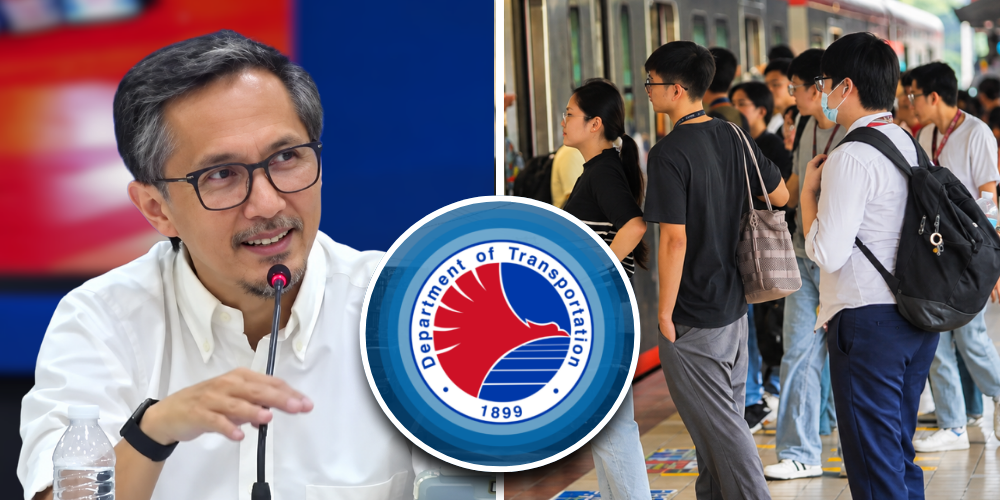
After spearheading an aggressive anti-corruption campaign at the Department of Public Works and Highways, Vince Dizon is heading back to the Department of Transportation (DOTr) with a mandate to improve public transportation and make daily commutes easier for Filipinos.
President Bongbong Marcos reassigned Dizon to the DOTr on Oct. 26, directing him to shorten Land Transportation Office queues, eliminate fixers and accelerate critical mass transportation projects. The move follows more than a year of Dizon overseeing reforms at the DPWH amid investigations into anomalous flood control projects.
During an Oct. 27 press conference, Dizon explained the President’s expectations for his return to the transportation department.
“He wants me to go back to DOTR to, in the words of Sec. Lino, disrupt things there to make the lives of our commuters easier,” Dizon said, referring to Presidential Communications Office Secretary Lino Cayetano.
Beyond corruption enforcement, Dizon identified road safety as a major concern requiring attention during his return to the DOTr.
“Critical yan. Daming namamatay sa mga kababayan natin dahil sa estado ng mga kalsada natin, dahil hindi maayos ang ating standards, ng signages, ng ating mga warning signs, daming namamatay. Hindi na pwede yan,” Dizon said.
Nationwide, the Philippine Statistics Authority estimated a road-traffic mortality rate of 12.2 deaths per 100,000 people in 2024, more than three times the country’s Sustainable Development Goals target of four deaths per 100,000.
Road safety was already among Dizon’s priorities during his previous DOTr tenure. In April 2025, he established a special task force involving the LTO and Land Transportation Franchising and Regulatory Board to review vehicle roadworthiness, driver qualifications and safety regulations.
During that period, the LTO reported 1,165 vehicles that failed roadworthiness inspections and 671 suspended driver’s licenses over violations involving road crashes and illegal drug use. Dizon also warned that suspensions could lead to permanent license revocations following investigations.
His latest transportation priorities also cover pedestrians, persons with disabilities (PWDs) and passengers who depend on public transportation. Dizon emphasized the need to improve conditions for Filipinos walking to their destinations and using trains, jeepneys and buses.
His focus on accessibility follows infrastructure improvements pursued during his DPWH tenure, particularly the rehabilitation of EDSA.
In July 2026, the government launched the ₱2.2 billion second phase of EDSA’s rehabilitation, covering sections from Orense Street in Makati to Monumento in Caloocan. The project includes road repairs and plans to widen sidewalks from approximately 1.2 to 1.5 meters to 3.2 meters, with completion previously targeted for 2027.
During an Oct. 14 inspection, Dizon reported that a sidewalk section near EDSA and Roxas Boulevard had already been widened to approximately 4.5 to 4.6 meters. Rehabilitation of EDSA’s vehicle lanes had reached around 40% completion.
The improvements concern one of Metro Manila’s most accident-prone roads. MMDA records showed that EDSA registered 8,873 road crashes in 2024, the highest among major thoroughfares in the capital region.
Dizon said the work would continue despite his transfer, emphasizing the importance of coordination between DOTr and DPWH on infrastructure that directly affects commuters.
“Ang dami naming kailangan gawin together, which we have actually been doing since lumipat ako dito from DOTR last year,” he said.
Lopez likewise emphasized that traffic management requires cooperation among government agencies, citing DPWH’s responsibilities over roads and bridges, DOTr’s oversight of public transportation and the role of local government units.
Dizon’s reassignment comes after a sweeping anti-corruption campaign at DPWH, where he pursued accountability against contractors and government personnel implicated in infrastructure irregularities.
Dizon now takes charge of DOTr as the LTO faces major controversies involving government computerization contracts and illegal transaction processing.
One of the largest involves ₱13.379 billion in computer fees collected between 2019 and 2025 through the continued use of the STRADCOM-operated information technology system. The Commission on Audit flagged the fees as an additional burden on motorists despite the government’s rollout of the replacement Land Transportation Management System.