


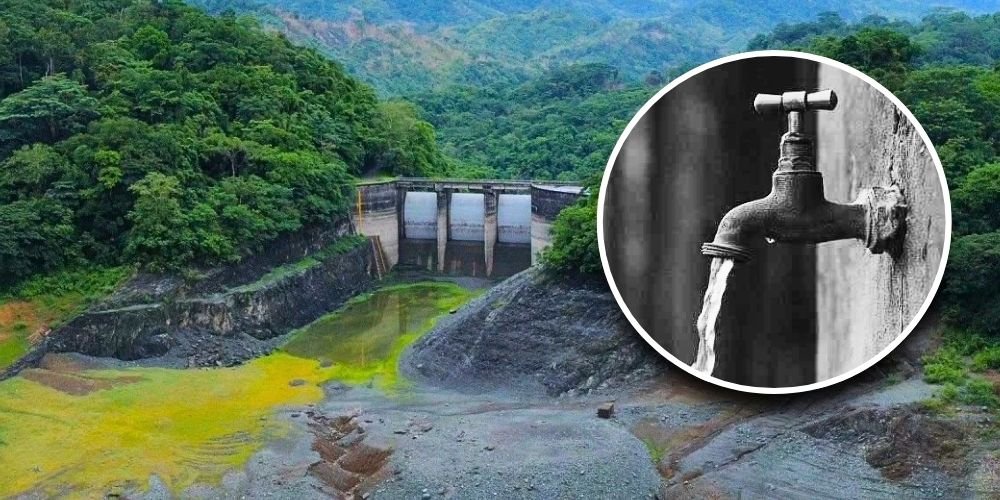
Angat Dam has plunged to the lowest water level ever recorded, breaking a 16-year-old drought record and pushing Metro Manila’s main raw water source deeper into critical territory.
The reservoir fell to 151.45 meters above sea level on July 23, according to the Bulacan Provincial Disaster Risk Reduction and Management Office. DOST-PAGASA had measured Angat at 152.20 meters on July 21, already an all-time low before the level dropped further.
The latest reading erased the previous record of about 157.56 meters logged in July 2010. Angat now stands 8.55 meters below its 160-meter critical mark, 28.55 meters below its 180-meter minimum operating level and 58.55 meters below the 210-meter normal high water level used during July.
“Sa record namin, ito na po ‘yung pinaka-lowest na elevation at 152. Maaaring pag hindi pa umulan ng mga ilang araw, bababa pa po ‘yan at ‘yun na ang pinaka-lowest elevation ng Angat,” PAGASA hydro forecaster Edgar dela Cruz said in Raffy Tima’s “24 Oras” report.
PAGASA recorded no significant rainfall over the Angat basin before its July 23 bulletin and forecast only one to 10 millimeters of rain. The reservoir needs sustained rainfall over its watershed in Bulacan and nearby parts of the Sierra Madre to produce enough runoff and reverse the decline. Rain over Metro Manila alone does not automatically refill Angat.
The dam supplies about 90 percent of Metro Manila’s raw water needs. It also supports irrigation across around 28,000 hectares of farmland in Bulacan and Pampanga and contributes to power generation.
The clearest immediate impact has emerged in San Jose del Monte. The Metropolitan Waterworks and Sewerage System cut the local water district’s allocation from 70 million liters per day to 45 million liters. The city began preparing groundwater wells, repairing leaks and maintaining treatment facilities.
Further reductions could force water providers to lower pressure or impose rotational interruptions. No widespread Metro Manila disruption has been confirmed, but the continuing decline leaves households, farms and dam operations increasingly exposed if sustained rain fails to reach the watershed.