


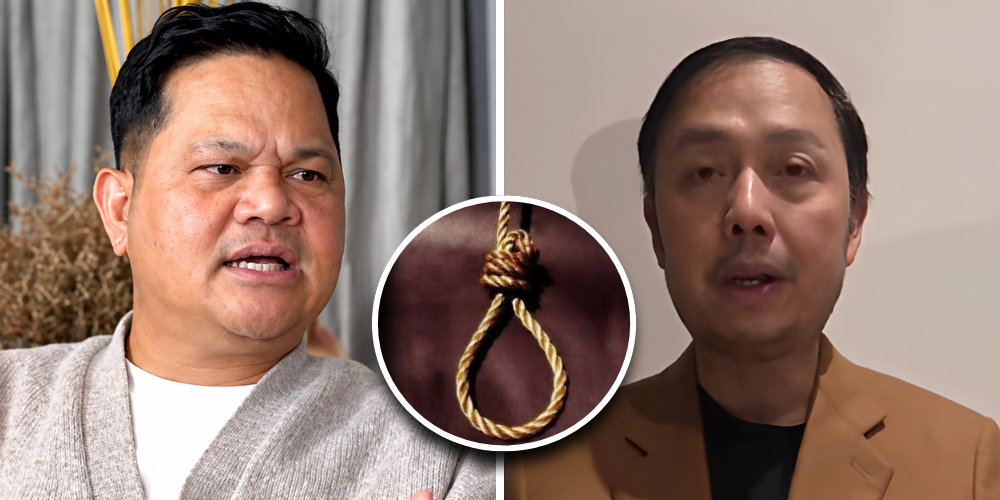
Prominent Filipino comedian-actor Bayani Agbayani said government officials and employees found guilty of stealing public funds should face the death penalty, arguing that severe punishment could discourage others from engaging in corruption.
Speaking on Fast Talk with Boy Abunda, Agbayani said people entrusted with government money should face the harshest consequence if they are found guilty of stealing from the public.
“Kapag nagnakaw ka, binoto ka ng tao o nasa poder ka ng gobyerno nagtatrabaho, dapat bitay. Para sa ganu’n wala nang gumaya pa na iba,” he said.
Agbayani said his position was rooted in frustration over graft, corruption and plunder, which he described as persistent problems in government. He also criticized people who enter public office and treat their positions as a means of making money.
“Kasi po ‘yan talaga ang problema natin, graft and corruption, plunder. Kasi parang ginagawa nilang negosyo ang pagpasok sa gobyerno,” he said.
His remarks came after he was asked about an earlier social media post concerning corruption involving funds for flood-control projects.
Recent flooding has also kept flood-control spending under scrutiny. As of September 17, the NDRRMC had recorded 9,608,977 people, or more than 2.78 million families, affected by the combined effects of the enhanced Habagat and tropical cyclones Luis, Maymay, Neneng and Pilandok. The same report listed 44 deaths and more than ₱14.3 billion in infrastructure damage.
A similar proposal targeting corruption was filed in the House of Representatives in the 19th Congress. House Bill No. 11211, or the proposed Death Penalty for Corruption Act, sought to impose death by firing squad on public officials convicted by the Sandiganbayan of graft and corruption under Republic Act No. 3019, malversation of public funds, or plunder.
The bill was introduced by then-Zamboanga City 1st District Rep. Khymer Adan T. Olaso. It covered elected and appointed officials across the executive, legislative and judicial branches, constitutional commissions, government-owned and controlled corporations and other government instrumentalities, as well as members of the military and police.