


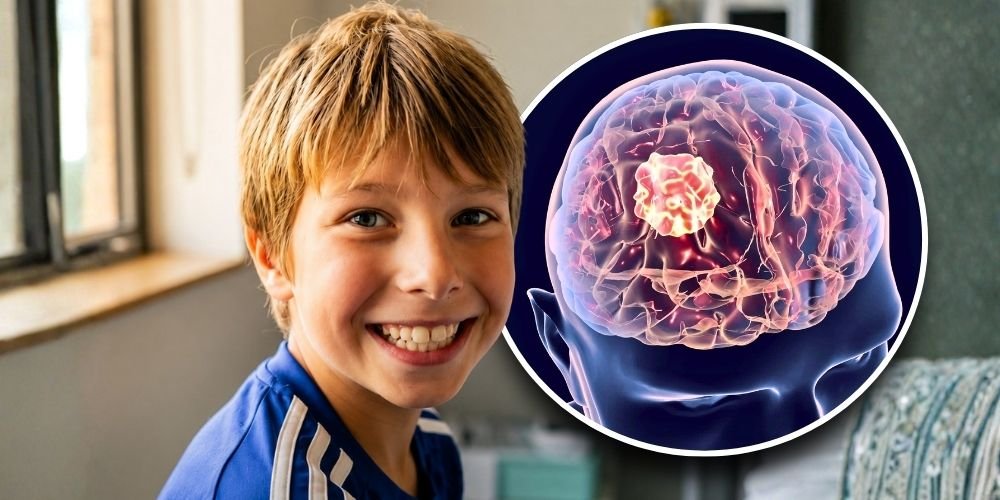
A Belgian boy diagnosed with one of the deadliest forms of childhood brain cancer has achieved complete remission after responding unexpectedly well to a targeted treatment, marking a rare milestone in cancer research.
Lucas Jemeljanova was 6 years old when he was diagnosed with diffuse intrinsic pontine glioma (DIPG), an aggressive brain tumor that develops in the brainstem. Because of its location, DIPG is difficult to treat and cannot usually be removed through surgery.
The tumor affects the pons, an area of the brain responsible for critical functions such as movement and communication between the brain and body. Historically, most children diagnosed with DIPG survive less than two years.
Lucas later joined the BIOMEDE clinical trial, an international study exploring targeted treatments for children with DIPG. He received everolimus, a drug that blocks the mTOR pathway involved in cell growth and tumor development.
Following treatment, Lucas’ scans showed no detectable tumor. In 2025, by age 13, he had reached long-term remission, an outcome considered extremely rare among DIPG patients.
His case has drawn attention from researchers studying why his tumor responded differently from most DIPG cases. Scientists are examining his tumor’s biological characteristics to identify factors that may help develop better treatments for other patients.
Despite the breakthrough, researchers stressed that Lucas’ recovery does not mean DIPG has been broadly cured. His case remains an exceptional response, while the disease continues to be one of the biggest challenges in pediatric cancer care.