


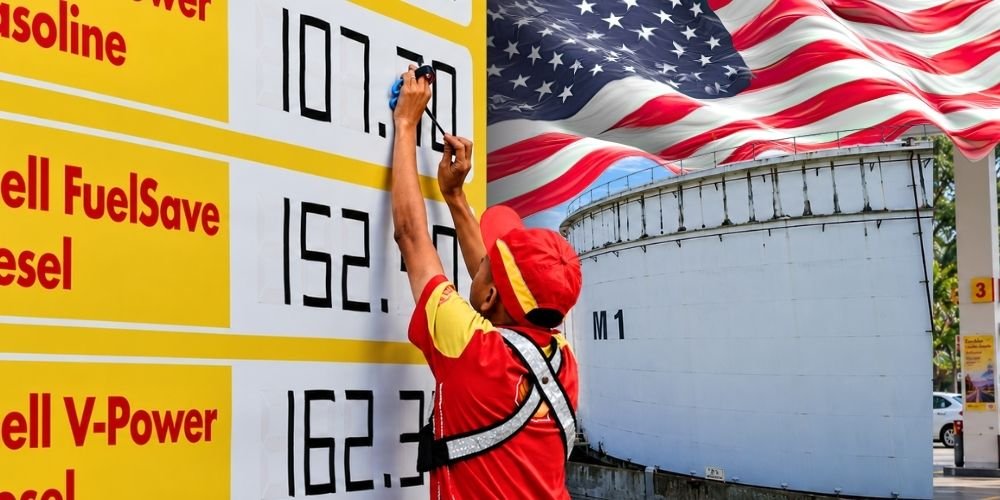
The Philippines is advancing plans to build an emergency oil reserve, with the United States exploring cooperation that could strengthen the country’s fuel supply during global crises and help keep transport, businesses and essential services running.
Energy Secretary Sharon Garin met US Energy Secretary Chris Wright in Washington, D.C., on Oct. 15 to discuss strategic petroleum reserves and ways the Philippines could draw on American expertise in storing emergency fuel and preparing for international supply disruptions.
The initiative comes after the 2026 Middle East conflict disrupted oil shipments through the Strait of Hormuz, driving some Philippine gasoline prices above ₱100 per liter in March. President Bongbong Marcos declared a national energy emergency on March 24.
The country’s exposure is significant. The Department of Energy said in August that 90% of Philippine crude oil imports came from just three Middle Eastern countries.
A government-held petroleum reserve would provide an additional source of fuel during shipping interruptions or shortages, helping sustain transport, deliveries and other services that Filipino households rely on.
Work is already underway in Bataan. At an Oct. 15 Senate hearing, Philippine National Oil Company official Antonio Buenviaje said land development had begun for the country’s planned strategic petroleum reserve facility. Its first storage tank, designed to hold one million barrels, is targeted for completion by the end of 2027.
The DOE is also backing legislation to establish a 60-day government fuel stockpile and raise the general minimum inventory requirement for private oil companies from 15 to 30 days. The proposed framework would create a combined 90-day supply buffer. As of September, the measure had cleared the House Committee on Energy and was undergoing Senate technical working group review.
“Our priority is to ensure a secure, reliable, and affordable energy supply for Filipino families and businesses,” Garin said.
The Washington discussions also covered liquefied natural gas, coal, geothermal energy, nuclear cooperation under the existing Philippines-US 123 Agreement, and natural hydrogen.