


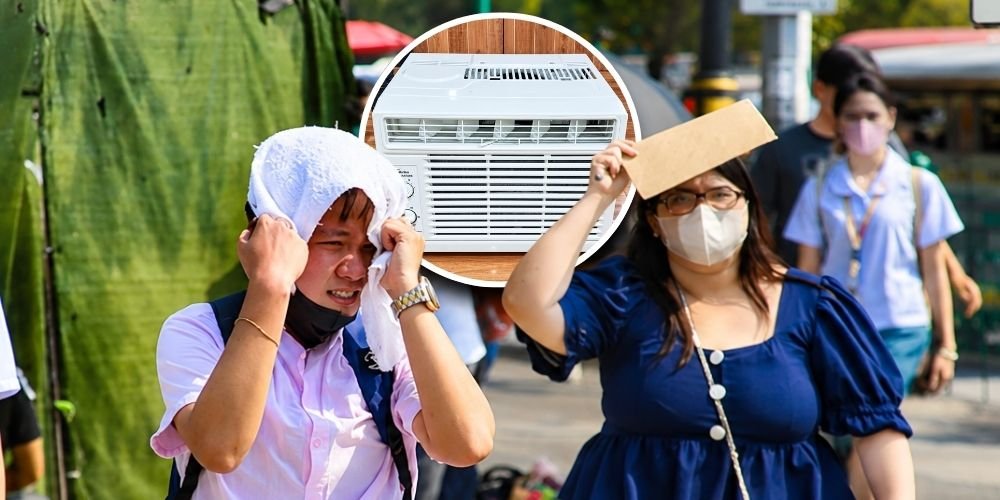
Demand for second-hand air conditioners is climbing as the Philippines prepares for El Niño, with consumers turning to more affordable used units as temperatures rise and brand-new models remain too expensive for many families.
The second-hand market has become substantial. Studies cited in the ninth ASEAN Energy Outlook estimate that as many as 300,000 used air conditioners are sold in the Philippines each year, equivalent to roughly one-third of new-unit sales. A Philstar report noted that a Facebook group dedicated to buying and selling used air conditioners has grown to more than 115,000 members.
Air conditioners originally bought for over ₱20,000 can end up reselling for around ₱4,500. Price remains the main attraction, with units quickly finding buyers once posted.
Demand typically rises from February to May as hotter weather drives households and small businesses to seek cheaper cooling options. Second-hand units are commonly sourced from condominiums, hotels, offices and restaurants undergoing renovation or demolition, with window-type models between one and 1.5 horsepower among the most widely sold.
The lower upfront price, however, can come with higher long-term costs. The ASEAN Energy Outlook warned that buyers may prioritize affordability over energy efficiency, leaving lower-income consumers exposed to bigger electricity bills over the remaining life of the appliance.
Air conditioners typically have a lifespan of around five to 10 years, while newer inverter models can use considerably less electricity than conventional units because their compressors slow down after reaching the desired temperature.
The strong El Niño developing in the Pacific could trigger a significant rise in heat-related deaths worldwide, with the Philippines potentially seeing around 6,500 additional deaths from September 2026 to February 2027.
The University of Chicago’s Climate Impact Lab projects that about 451,000 additional heat-related deaths could occur globally from June 2026 through February 2027 compared with the 1996-2025 average.
The Department of Health recorded seven deaths associated with extreme heat during the height of the hot season in early 2024.