


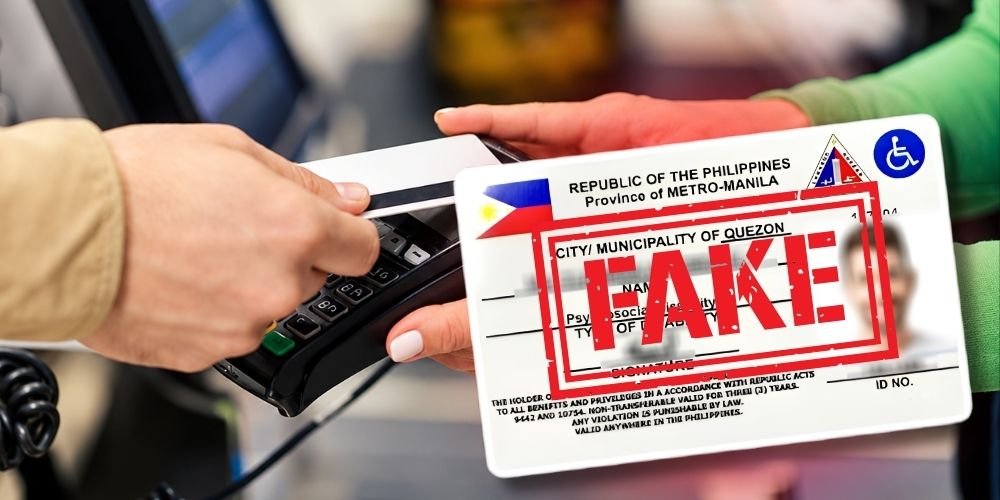
The Department of Justice (DOJ) has raised concerns over nearly six million unaccounted Persons with Disability (PWD) identification cards in the Philippines, warning that individuals using fraudulent IDs to claim government-mandated benefits could face criminal charges.
Chief State Counsel Dennis Arvin Chan cited data from the National Council on Disability Affairs (NCDA) showing approximately 2.8 million registered persons with disabilities nationwide, compared with an estimated 8.5 million reported PWD ID users.
“There are around 8.5 million people using fake PWD IDs. So merong mga around 6 million na discrepancy there,” Chan said.
Chan warned that the discrepancy could result in serious economic losses for businesses and the government, prompting the DOJ to prepare legal guidance on possible action against fraudulent ID users and those responsible for issuing the cards.
Justice Secretary Fredderick Vida said fraudulent PWD ID users could face charges, including falsification of public documents and estafa. Public officials who improperly issue IDs may face anti-graft charges, while physicians who provide false medical certifications could also face criminal liability.
Vida illustrated the financial impact using a ₱1,200 restaurant bill, estimating that a fraudulent discount could cost the establishment ₱120 and reduce government tax collections by approximately ₱50.
“No such thing as free lunch. Because of your deception, someone else is suffering. Because you’re taking advantage of the system, someone else is carrying the burden,” Vida said.
The DOJ clarified that businesses must continue honoring legally mandated PWD benefits upon presentation of an ID. Establishments may subsequently verify questionable cards with issuing local government units and pursue legal action if fraud is established.
The NCDA has sought legal guidance from the DOJ as authorities implement a unified PWD identification system designed to strengthen verification and prevent fraud. Under NCDA Administrative Order No. 001, Series of 2026, the system has a three-year transition period.