


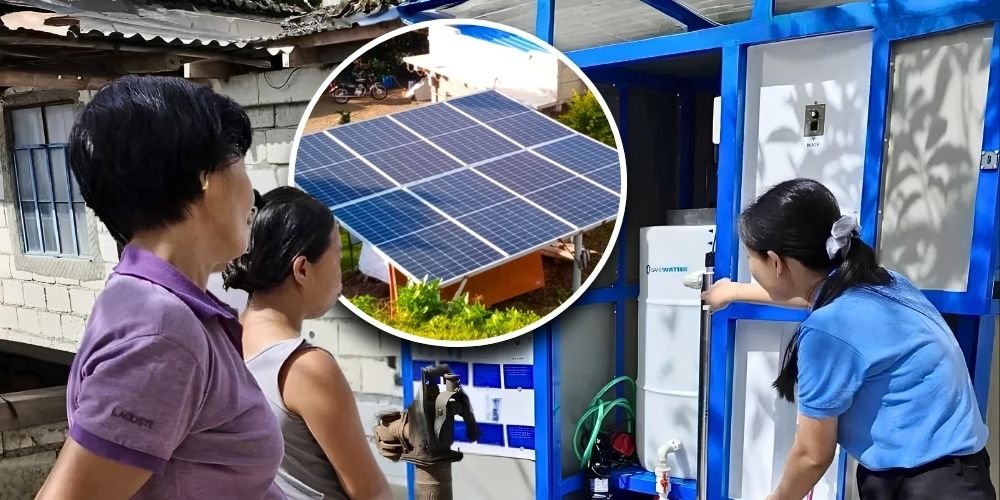
Filipino researchers have developed a solar-powered water treatment system that can produce up to 2,000 liters of potable water, providing an alternative source of clean drinking water for communities with limited access to electricity and conventional water infrastructure.
Developed by the Department of Science and Technology’s Industrial Technology Development Institute (DOST-ITDI), the SAFEWATRS system is designed to treat freshwater from rivers, lakes, springs and collected rainwater using solar energy, making it particularly useful in remote communities and areas affected by disasters.
During testing using water from Laguna Lake, the treated water met the mandatory parameters evaluated under the Philippine National Standards for Drinking Water, demonstrating the system’s ability to turn available freshwater sources into water suitable for drinking.
SAFEWATRS has already been deployed in several communities across the Philippines. In Sto. Domingo, Ilocos Sur, one unit was reported to serve around 180 households, while another deployed in Madalag, Aklan began providing drinking water in 2026 to at least 50 households in an Akeanon-Bukidnon indigenous community.
The Filipino-developed technology has also received international recognition, winning a Silver Award at the 49th International Exhibition of Inventions Geneva in Switzerland in 2024.
Its development comes as access to safe drinking water remains a major concern in the country. Data from the Philippine Statistics Authority showed that in 2024, only 53.1% of Filipino families had access to safely managed drinking water services, while 6.5% experienced at least one period when drinking water was unavailable from their usual source.
By combining renewable energy with portable water-treatment technology, SAFEWATRS gives communities another way to secure potable water when established systems are unavailable, inaccessible or disrupted by emergencies.