


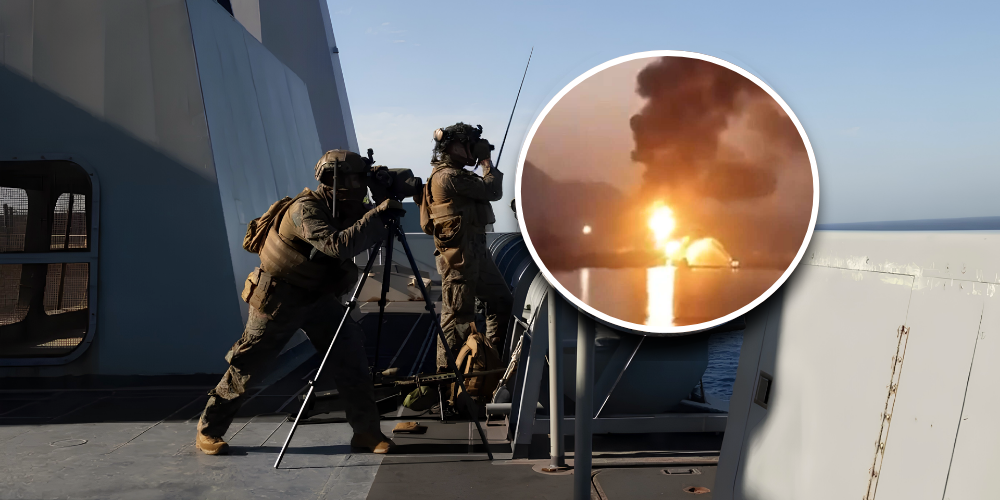
The Strait of Hormuz crisis has moved from blockade to direct military action. The U.S. says it destroyed Iranian boats and intercepted missiles and drones while trying to reopen the waterway. The UAE, a key American ally, also reported its first Iranian attack since a fragile ceasefire began in early April.
The escalation is hitting commercial shipping, oil facilities, and air travel in one of the world’s most important energy corridors.
The U.S. military said it fired on Iranian forces and sank six small boats on Monday as American forces moved to reopen the strait, the waterway between Iran and Oman that carries global energy shipments.
Two American-flagged merchant ships passed through under “Project Freedom,” an initiative announced by President Donald Trump. Adm. Brad Cooper, commander of U.S. Central Command, said American forces had opened a passage free of Iranian mines and defeated missiles, drones, and small boats launched at civilian ships under U.S. protection.
“The U.S. commanders who are on the scene have all the authority necessary to defend their unit and to defend commercial shipping — as we saw and demonstrated earlier today,” Cooper said.
The UAE Defense Ministry said its air defenses engaged 15 missiles and four drones fired by Iran. Authorities in Fujairah said one drone sparked a fire at a key oil facility, injuring three Indian nationals. The British military reported two cargo vessels ablaze off the UAE.
Four missile alerts were issued Monday, urging residents to seek shelter. Commercial planes bound for Dubai and Abu Dhabi turned around midair. Fujairah gives the UAE sea access outside the strait and hosts major oil storage facilities.
Iran did not directly confirm or deny the attacks. Foreign Minister Abbas Araghchi warned on X that the U.S. and UAE “should be wary of being dragged back into quagmire.”