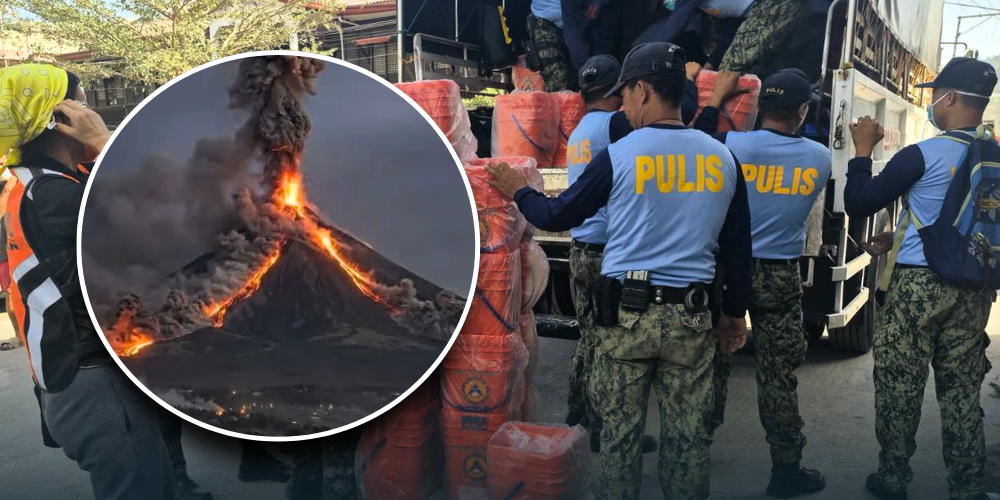
Police tightened security around Mayon Volcano as renewed volcanic activity raised the risk of a wider danger zone and stricter evacuation restrictions in Albay.
The Philippine National Police deployed additional units to secure entry points leading to Mayon’s slopes after Philippine Institute of Volcanology and Seismology warned that activity could escalate. Authorities are now discussing whether to expand the six-kilometer Permanent Danger Zone to seven kilometers, a move that would cover more villages already under evacuation and put more pressure on residents trying to return to farms, homes, or belongings.
PHIVOLCS recorded another pyroclastic density current at Mayon between 7:19 a.m. and 7:26 a.m. on Tuesday, May 5. The agency said it was triggered by lava collapse on the volcano’s southwestern slopes. Alert Level 3 remains in effect, with entry into the six-kilometer danger zone still prohibited.
Authorities treated the pyroclastic density currents as an immediate life-threatening risk, prompting police to maintain round-the-clock checkpoints, increase visibility, and intensify foot and mobile patrols. Aerial monitoring is also being considered for remote paths.
PNP chief Gen. Jose Melencio Nartatez Jr. said enforcement must stay firm but humane.
“Our ground commanders have been given a clear directive to exercise maximum tolerance but maintain zero compromise on the ‘No Entry’ policy,” Nartatez said.
He said residents caught entering the restricted zone for farming would be assisted back to evacuation centers while police explain the “immediate life-threatening risks of pyroclastic density currents.” Tourists and sightseers who deliberately ignore cordons may be escorted out and referred to local government units for legal action.
Nartatez said the PNP is coordinating with barangay officials and intelligence networks to monitor alleys, back trails, and other possible routes evacuees may use to quietly return.
PHIVOLCS also reported ash emissions at Kanlaon Volcano in Negros Island on Tuesday morning, with grayish plumes reaching up to 800 meters above the crater and drifting west.