


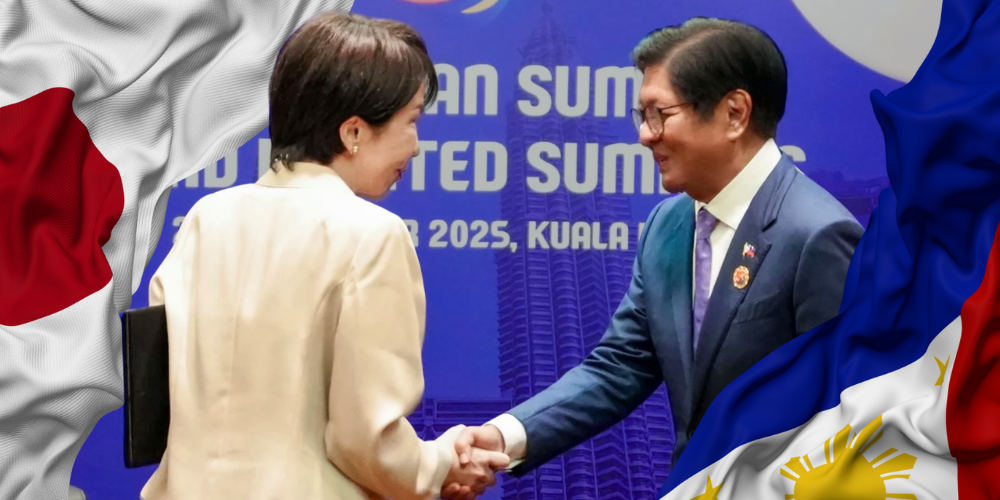
President Bongbong Marcos is visiting Tokyo from May 26 to 29 for a state visit with three major priorities: the full operationalization of two defense agreements with Japan, possible Philippine access to a $10-billion regional energy facility, and a new labor agreement covering around 340,000 Filipinos living and working in Japan.
The stakes are concrete. Manila is seeking stronger energy resilience, the West Philippine Sea remains contested, and thousands of Filipinos in Japan need stronger legal protection on the ground.
DFA Spokesperson Analyn Ratonel said the trip is an opportunity to deepen cooperation in security, maritime and defense, economy, energy resilience, decarbonization, and emerging sectors.
“This trip is very important because it is an opportunity for President Marcos Jr. and Prime Minister Sanae Takaichi to discuss cooperation between the Philippines and Japan in the fields of security, maritime and defense, economy, energy resilience and decarbonization, and emerging and future-oriented sectors,” Ratonel said.
On defense, Marcos is pushing for the full implementation of the Reciprocal Access Agreement (RAA), signed in July 2024 and in force since September 2025, and the Acquisition and Cross-Servicing Agreement (JSDF), signed in January 2026. The RAA allows the Armed Forces of the Philippines and Japan Self-Defense Forces to conduct joint activities in each other’s territory, while the ACSA sets the framework for exchanging supplies and logistics.
Ratonel said the agenda also covers defense equipment transfer and Japan’s support for AFP modernization. The West Philippine Sea will also be discussed within ASEAN and Indo-Pacific security talks.
On energy, Marcos is seeking clarity on POWERR Asia, a $10-billion Japanese facility launched in April to help Asian nations strengthen energy security, stabilize supply chains, and diversify fuel sources.
The pressure is real. The Philippines remains exposed to global oil shocks as Middle East tensions and disruptions in the Strait of Hormuz continue to affect energy supply routes.
No Philippine allocation under POWERR Asia has been confirmed. Ratonel said the Philippines is still “finding ways for our long-term energy supply,” with details expected to be discussed by Marcos and Takaichi.
A human resources agreement is also expected, covering around 340,000 Filipinos in Japan, roughly half permanent migrants and half temporary workers in healthcare, engineering, education, and other fields.
Marcos and First Lady Liza Marcos will be received by the Emperor and Empress of Japan at the Imperial Palace. Marcos will also meet Japanese business leaders and the Filipino community in Tokyo.
The visit marks the first Philippine presidential state visit to Japan in 11 years, following President Benigno Aquino III’s 2015 state visit, when the two countries elevated ties to a Strengthened Strategic Partnership. This year also marks the 70th anniversary of normalized Philippines-Japan diplomatic relations.
The three tracks Marcos is pushing cover what Manila needs from Tokyo now: stronger security cooperation, more stable energy options, and better protection for Filipinos working abroad.