


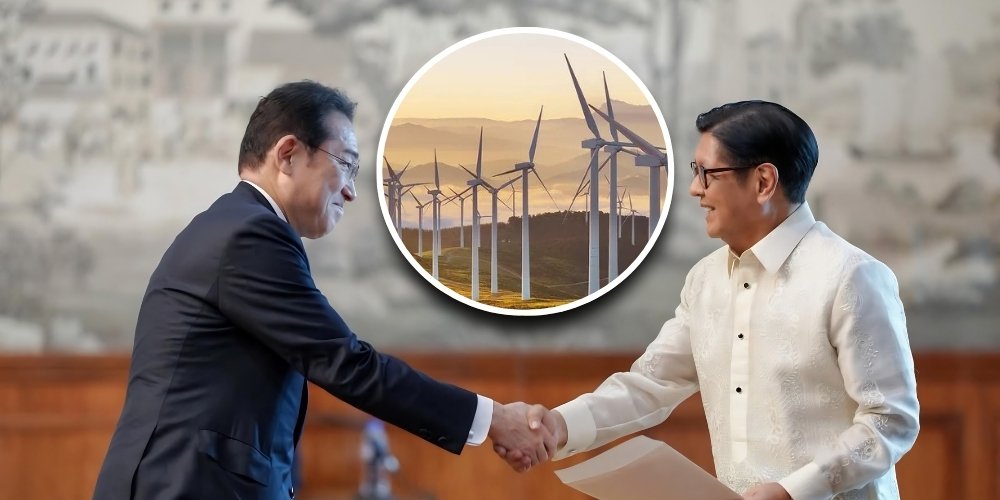
Amid rising energy costs and instability driven by the ongoing Middle East conflict, Bongbong Marcos and former Japanese Prime Minister Kishida Fumio met in Malacañang on Thursday to fast-track the Philippines’ transition to renewable energy.
Their talks focused on strengthening clean energy cooperation through the Asia Zero Emission Community (AZEC), a key initiative aimed at cutting dependence on fossil fuels, securing the country’s energy future and advancing regional decarbonization.
“We hope that we can continue our work in moving our countries away from fossil fuels and absorb more of the renewables technology that we have been trying to shift to,” Marcos said.
Kishida, who arrived in Manila as Special Envoy for Japanese Prime Minister Sanae Takaichi, highlighted Japan’s continued support for the Philippines’ renewable energy shift. This commitment was reinforced by Japan’s recent announcement of a $10 billion energy cooperation fund, POWERR Asia, designed to stabilize energy supply in the Philippines amid global disruptions and volatile markets.
The ongoing Middle East crisis, which impacts global oil prices and disrupts energy systems, has a significant effect on the Philippines, driving fuel prices higher as the country relies on imports. Marcos stressed that these disruptions make energy diversification more urgent—not only for economic stability but also for the welfare of OFWs. He underscored the need to reduce reliance on fossil fuels and pivot toward sustainable sources such as wind, solar and geothermal energy, which can provide a stable long-term supply.
The Japan-Philippines partnership aims to accelerate this transition by deepening collaboration in clean energy technologies. Both countries are committed to boosting energy resilience, driving economic growth and reducing carbon footprints through innovation and expanded renewable capacity.
This cooperation positions the Philippines to emerge as a leader in Southeast Asia’s renewable energy sector. By diversifying its energy mix and advancing sustainable solutions, the country seeks to secure its energy future while contributing to global environmental sustainability.