

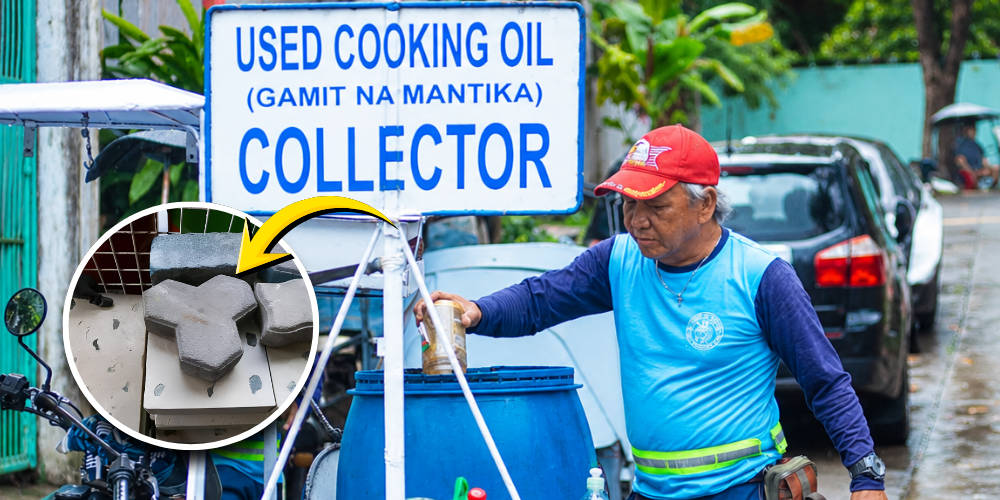
Marikina City is converting used household cooking oil into paving blocks and landscaping bricks used in public parks, playgrounds and school grounds. Its collection program provides a regular disposal service for grease that can harden inside pipes and obstruct drainage when poured down sinks.
The City Environmental Management Office, or CEMO, oversees the initiative. The collection system it has described covers households in all 16 barangays through monthly rounds by roving tricycles. The city transports the gathered oil to its recycling facility for processing.
Workers shred Styrofoam into flakes before melting it in used cooking oil under controlled temperatures. A machine called a styro-plastic densifier processes the waste for molding into blocks. Thin plastic waste also goes into the mixture.
CEMO official Renan Mateo previously described a batch using 10 kilograms of used cooking oil, 20 kilograms of Styrofoam and three kilograms of thin plastics. That combination could produce 20 to 25 bricks.
The bricks serve specific purposes. Mateo said they can be used for landscaping, flooring, benches and pathways carrying light traffic. He cautioned that they are brittle and unsuitable for building construction or routes used by vehicles. Among the projects he identified were benches at the Marikina Sports Center, with recycled materials also used in parks and public schools.
Marikina began collecting used cooking oil in 2008, initially processing it into fuel. By 2012, the city was encouraging residents to turn over their oil to CEMO for use with discarded Styrofoam in decorative paving blocks. The 2012 plan also called for CEMO to collect used Styrofoam through its materials recovery facility.
Protecting the water system was an explicit objective. In the city’s 2012 appeal, then Mayor Del de Guzman identified the Marikina River as a particular concern and said CEMO was tasked with preventing used oil from contaminating it.
Improper disposal can also contribute to flooding when hardened oil blocks pipes and drainage systems. The continuing collection gives households a way to keep that waste out of drains. The Marikina PIO is urging residents to store their used cooking oil in sealed containers for collection instead of pouring it down sinks.