


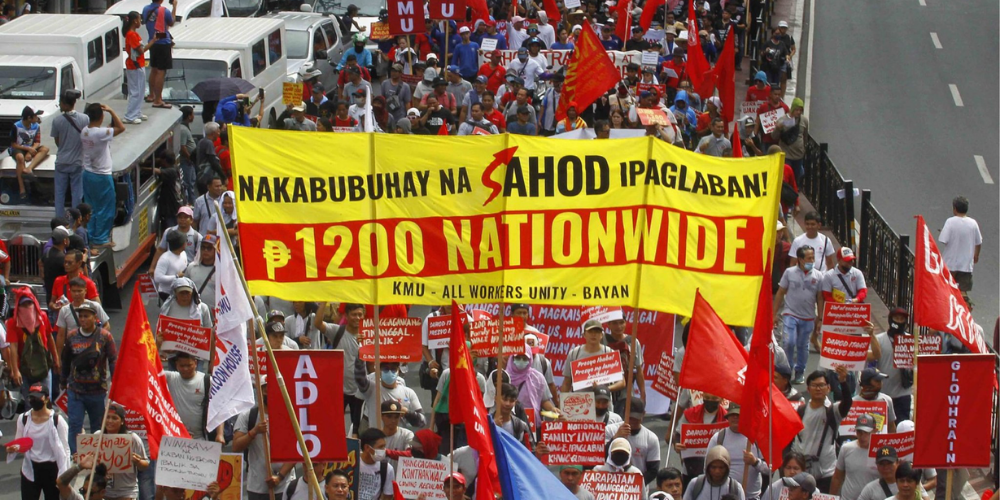
The Department of Labor and Employment said a decision on petitions seeking a ₱1,200 daily minimum wage for workers in Metro Manila could be released by July.
The petitions will be reviewed by the Regional Tripartite Wages and Productivity Board in the National Capital Region. As of April 29, the board had received 16 petitions calling for wage hikes, including one from the Business Process Outsourcing Industry Employees Network (BIEN) Philippines.
BIEN filed its petition on April 29, two days before Labor Day. The group said it is pushing to raise the baseline minimum wage to ₱1,200 a day as rising prices have eroded workers’ purchasing power and made daily living more expensive. BIEN cited increasing oil prices and higher costs for electricity, water and basic goods as added burdens on workers. The petition also referenced the ongoing national energy emergency declared amid global tensions in the Middle East.
Under wage board rules, the Regional Tripartite Wages and Productivity Board must evaluate petitions and conduct consultations with labor and employer groups before issuing any new wage order. The board also holds public hearings ahead of final decisions. The current review cycle began after the previous round ended and may result in a new wage order by July 18.
The petitions come at a time when workers say the current minimum wage no longer meets basic needs. The daily minimum wage for non-agricultural workers in Metro Manila stands at ₱695 following a ₱50 increase that took effect on July 18, 2025. BIEN and other groups argue that this rate is insufficient for workers and their families to cope with rising costs.
Other petitions among the 16 submitted seek varying increases, with some calling for a ₱500 daily raise. DOLE said it is up to the wage board to evaluate each petition based on economic conditions and determine how they will be addressed in the review.
Workers and labor groups have used the wage petition process to underscore broader frustrations over current pay levels and the rising cost of living. Many minimum wage earners continue to argue that wage growth lags behind inflation and daily expenses, making it harder for families to meet basic needs.