


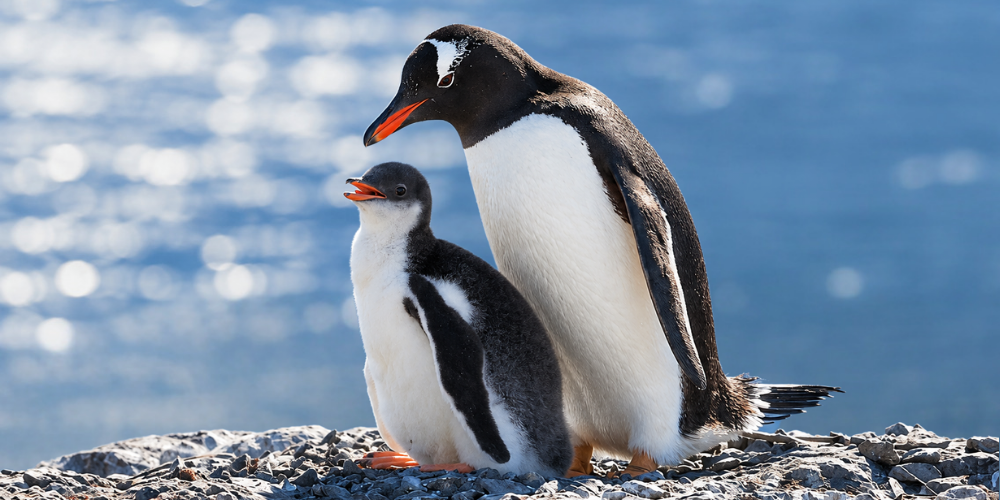
Scientists have identified a new penguin species from the remote Kerguelen Islands in the southern Indian Ocean, the first new penguin species formally named in more than a century.
The newly described Pygoscelis kerguelensis, or southeastern gentoo penguin, was previously grouped with other gentoo penguins. Researchers established it as a distinct species after analyzing whole-genome sequences from 64 penguins across 10 breeding colonies.
The international team, led by researchers from Chile and the University of California, Berkeley, found that gentoo penguins comprise four genetically distinct species. These are the northern gentoo, P. papua; southern gentoo, P. ellsworthi; eastern gentoo, P. taeniata; and southeastern gentoo, P. kerguelensis.
Researchers estimate the populations began diverging about 300,000 to 500,000 years ago as geographic and oceanographic barriers limited contact between colonies. Differences were also found in their physical traits, calls, diets and breeding patterns.
Initial findings and the proposed reclassification were announced by UC Berkeley in May. The formal naming of P. kerguelensis became official through publication of the peer-reviewed study in Communications Biology on September 21, 2026.
The designated reference specimen for the new species is an adult male collected on Kerguelen Island on December 31, 1897 and preserved at the American Museum of Natural History. The Kerguelen Islands, also called the Desolation Islands, are an island group located in the subantarctic region. They are considered among the most remote and isolated places on Earth.
The revised classification could also affect conservation assessments. Researchers projected substantial losses of suitable habitat for three of the four species as the climate changes, allowing the risks facing each population to be evaluated separately.