


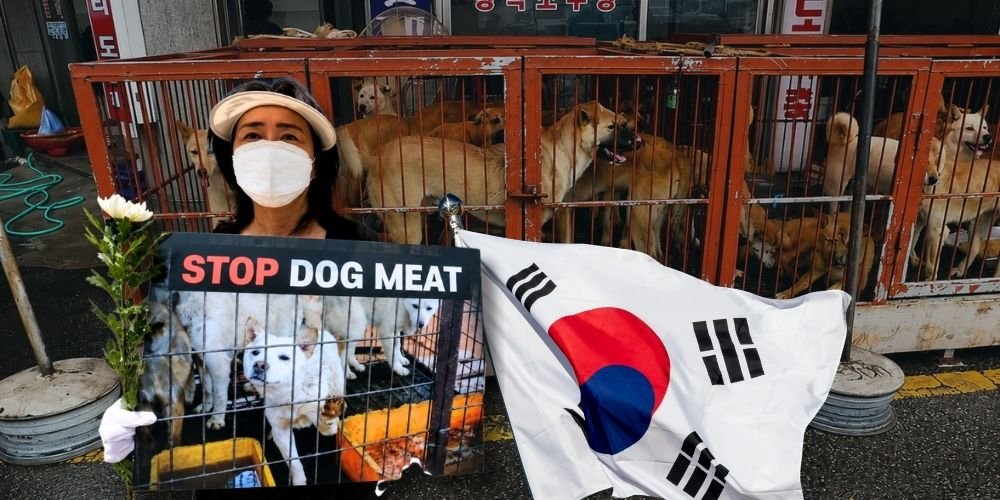
South Korea has begun phasing out its dog meat industry after lawmakers approved a historic ban that will end the breeding, slaughtering, distribution, and sale of dogs for human consumption.
The South Korean National Assembly passed the Special Act on the Termination of Breeding, Slaughter, and Distribution of Dogs for Consumption on January 9, 2024. The law was enacted on February 6, 2024, and established a three-year transition period before full enforcement begins on February 7, 2027.
The law prohibits raising or breeding dogs for food, slaughtering dogs for consumption, and distributing or selling dog meat products. Businesses involved in the trade must prepare plans to close or transition into other livelihoods.
Government figures showed that the industry involved around 1,150 dog farms, 34 slaughter businesses, 219 distributors, and about 1,600 restaurants selling dog meat dishes.
The move came after years of declining demand for dog meat and changing views on animal welfare in South Korea. More citizens began treating dogs as companion animals, increasing calls for stronger protections.
“We believe this ban marks a significant turning point in South Korea’s attitude to animal protection,” said Lee Sang-kyung, a spokesperson for Humane Society International’s local branch.
The transition has also affected people who depended on the industry. Some dog farmers and business owners opposed the ban and called for greater support as they move away from dog meat production.
Agriculture Minister Song Mi-ryung said the government would continue working with affected groups during the transition period.
“We plan to continue communicating with the dog meat industry and animal rights organizations to come up with reasonable solutions, and completely end dog meat consumption without disruptions,” Song said.
Once the law takes full effect in 2027, commercial dog meat production and sales will be prohibited nationwide.