

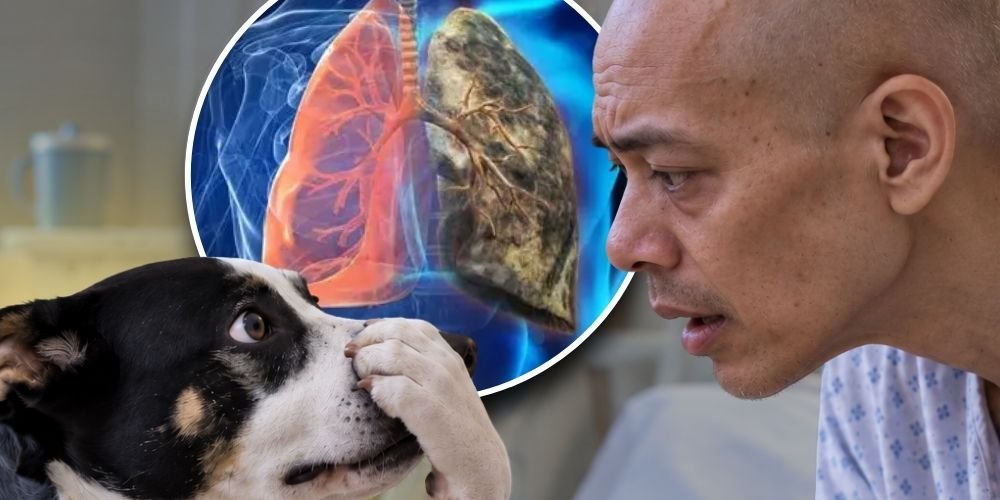
Five trained dogs correctly identified at least 95.5 percent of lung cancer cases just by sniffing breath samples during training tests in Germany. The findings show promise for a non-invasive method that could support existing cancer screening.
Led by Christian Grah and published in the Journal of Breath Research on June 2, 2026, the study involved 824 volunteers, including 111 with diagnosed lung cancer. Each dog examined 11,900 breath samples, including repeated samples from the same people.
The dogs searched for chemical clues in exhaled air. Breath contains volatile organic compounds, or VOCs, whose patterns can change with disease. Researchers are studying whether dogs recognize patterns linked to cancer, although the precise chemicals remain uncertain.
Participants wore masks for five minutes. At least three dogs had to flag a sample for a positive result; one or two alerts meant another sample was needed. Individually, the dogs achieved 82 to 89 percent sensitivity, a measure of how often a test detects cancer when present.
For patients, the promise is sample collection without needles or radiation. If proven reliable in clinical screening, a breath test could help identify who needs further examination. The World Health Organization says lung cancer is often diagnosed at an advanced stage, when treatment options are limited.
The findings came from training tests, and many cancer-free volunteers were young and healthy. Researchers proposed testing the dogs alongside low-dose CT scans in people undergoing screening. That would help establish whether the dogs can reliably flag cancer in patients who have not yet been diagnosed.
In the Philippines, lung cancer was the leading cause of cancer death in 2024. The International Agency for Research on Cancer estimated 15,312 new cases and 11,715 deaths from the disease that year. That is roughly 32 deaths a day.