


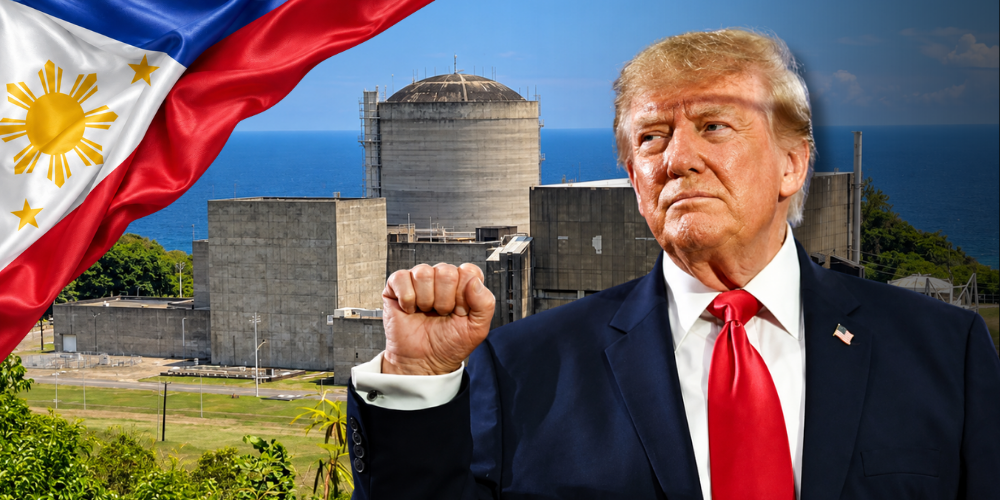
As the Philippines aims to begin nuclear power generation by 2032, a U.S. agency has indicated that private power developers could potentially access loans of up to $5 billion (nearly ₱320 billion) , Department of Energy Undersecretary Giovanni Carlo Bacordo said Tuesday. He added that the financing could come with repayment periods of up to 25 years, although no agreement has been finalized.
The proposal followed a US mission led by Energy Secretary Sharon Garin. The U.S. International Development Finance Corporation discussed possible debt support, while US and Asian development banks are exploring engineering assistance and financing arrangements.
The discussions come amid rising electricity and fuel prices, driven by imported energy costs, international supply disruptions, and pressure on domestic power supply. Meralco’s residential rate reached ₱15.0615 per kilowatt-hour in October.
In one September week, gasoline rose ₱5.68 per liter and diesel ₱4.31 amid global oil price increases. President Bongbong Marcos had declared a national energy emergency in March following Middle East supply disruptions.
The Philippines’ reliance on imported fossil fuels leaves electricity producers exposed to international price swings and peso depreciation. Nuclear power could diversify generation and strengthen energy security, although its high construction costs make immediate electricity savings unlikely.
“Pushing the envelope further, perhaps it is time for us to revisit nuclear energy production,” Marcos said during his July 27 State of the Nation Address, advocating nuclear power to strengthen energy security.
Marcos said nuclear generation could help reduce electricity costs, provided the country establishes strict safety standards and improves public understanding of the technology.
He also revisited the Bataan Nuclear Power Plant, built under his father’s administration and completed in 1984 but never operated. The facility was mothballed under President Corazon Aquino amid safety and financial concerns and corruption allegations.
“Yes, of course, yes, in my view, the non-commissioning of the Bataan Nuclear Power Plant was really a bad choice to make at the time,” Marcos said during his Oct. 11 Singapore briefing, criticizing the decision he linked to subsequent prolonged power shortages.
During that briefing, Marcos reaffirmed his confidence in the government’s nuclear development timetable.
“One thousand two hundred megawatts I think is achievable… If we continue to increase our power generation, we will easily achieve that stated goal,” Marcos, on the government’s target of introducing 1,200 megawatts of nuclear capacity by 2032.
He cited growing electricity demand from artificial intelligence, data centers and the digital economy. However, he acknowledged nuclear development could take six to seven years, with permitting consuming roughly half that period.
The Philippine Energy Plan targets 4,800 megawatts by 2050. Officials are reassessing Bataan, evaluating smaller reactors, and preparing the nuclear regulator, PhilATOM, with actual projects still dependent on financing, technical assessments, and safety approvals.