

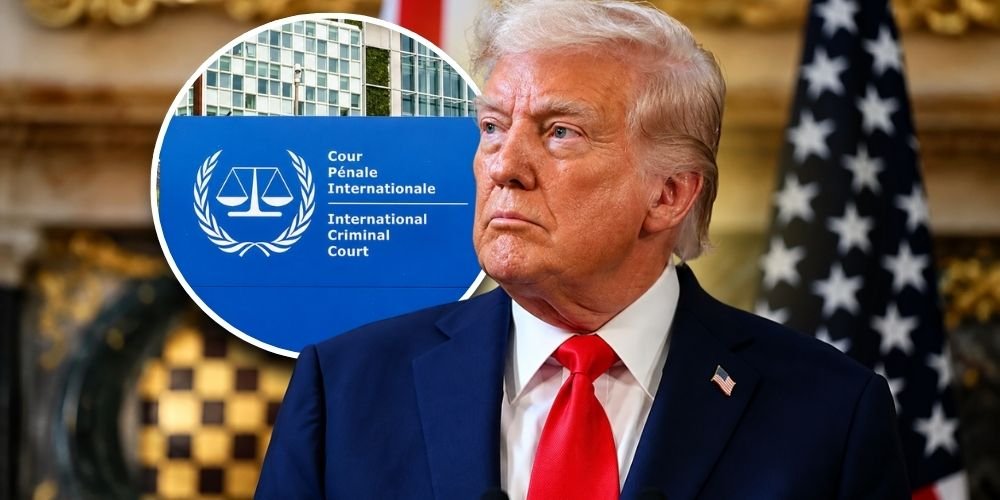
US Secretary of State Marco Rubio has sanctioned International Criminal Court – ICC President Tomoko Akane and senior trial lawyer Abdoulaye Seye, taking Washington’s offensive against the Hague tribunal directly to its leadership as the court battles mounting questions over its reach and turmoil inside its own prosecution office.
Rubio announced the sanctions on August 18, accusing Akane and Seye of participating in ICC action against officials from countries that never accepted the court’s jurisdiction.
“These individuals have directly engaged in efforts by the ICC to investigate, arrest, detain, or prosecute officials whose government has not consented to ICC jurisdiction,” Rubio said.
He delivered an even harsher assessment of the institution itself.
“The Trump Administration has been clear: the International Criminal Court is a corrupt and fatally politicized supranational court that has maliciously abused its authority and exceeded its mandate,” Rubio said. “We will not tolerate its assault on state sovereignty.”
The sanctions freeze property and interests in property belonging to Akane and Seye that fall under US jurisdiction and effectively isolate them from the American financial system, whose reach extends deeply into international banking. The US Treasury authorized only a limited wind-down of transactions involving the two officials through September 17.
The action puts unprecedented pressure on the ICC’s top office and expands a US campaign already aimed at judges and prosecutors involved in cases targeting American and Israeli officials.
Rubio launched a broader State Department offensive against the tribunal in July, describing the ICC as a threat to American sovereignty and setting out a campaign to systematically weaken its ability to operate. Washington has also pushed governments to reconsider their participation in the court.
The confrontation centers on a fundamental dispute the ICC has repeatedly failed to settle with some of the world’s most powerful governments.
The United States and Israel never joined the Rome Statute and do not recognize ICC authority over their nationals. Russia and China are also outside the court.
President Donald J. Trump formalized Washington’s position in a February 2025 executive order, accusing the ICC of “illegitimate and baseless actions targeting America and our close ally Israel.”
Trump said the tribunal had asserted authority over countries that never surrendered their citizens to ICC jurisdiction and warned that its actions created a dangerous precedent for American troops and officials serving overseas.
The ICC argues that its treaty allows it to prosecute nationals of non-member countries when alleged crimes occur on the territory of a member state. Palestine joined the Rome Statute in 2015, and ICC judges have held that the court’s territorial jurisdiction extends to Gaza and the West Bank, including East Jerusalem.
That legal theory has remained fiercely contested by Israel and the United States, which maintain that neither government ever consented to the court exercising criminal authority over their officials.
The ICC remains a major issue in the Philippines, where ex-President Rody Duterte is being held at the court’s detention facility in The Hague while awaiting trial on crimes against humanity charges. His trial is scheduled to begin on Nov. 30, 2026.
Although the country withdrew from the Rome Statute in 2019, the tribunal maintains it has jurisdiction over alleged crimes committed while the country was still a member.