

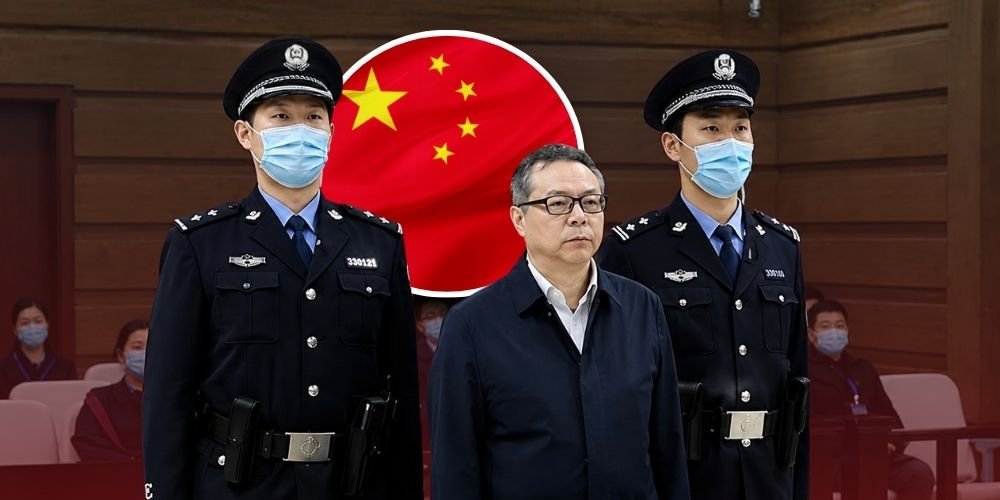
China executed former China Huarong Asset Management chairman and senior banking regulator Lai Xiaomin on Jan. 29, 2021, just 24 days after a Tianjin court sentenced him to death.
Lai was convicted of accepting or soliciting 1.788 billion yuan in bribes between 2008 and 2018—equivalent to roughly ₱16.29 billion using the July 20, 2026, mid-market exchange rate. He was also found guilty of embezzlement and bigamy.
A CCTV documentary showed investigators recovering more than 200 million yuan in cash hidden inside cabinets and safes at a Beijing property linked to Lai. Using the same exchange rate, the cash was worth about ₱1.82 billion. Authorities also displayed luxury watches, gold, artworks, vehicles and multiple properties connected to the case.
The court handed down the death sentence on Jan. 5. His appeal was rejected on Jan. 21, after which China’s Supreme People’s Court approved the execution. Unlike many death sentences in China that are suspended for two years and later commuted to life imprisonment, Lai received no reprieve.
China’s highest court acknowledged Lai’s cooperation with investigators but ruled that the scale of the bribery, the seriousness of the offenses and the damage caused warranted the death penalty.
The 24-day timeline drew international attention and underscored the intensity of President Xi Jinping’s anti-corruption campaign, particularly in China’s financial sector, where authorities sought to send a strong warning against large-scale corruption.
The case carries weight in the Philippine context as Filipinos demand swift action against corruption tied to flood control funds. The administration of President Ferdinand Marcos Jr. is pressing its anti‑corruption drive, now targeting former House Speaker Martin Romualdez, accused by the Office of the Ombudsman of plunder, graft, direct bribery, and money laundering involving an estimated ₱56 billion from 2022 to 2025.