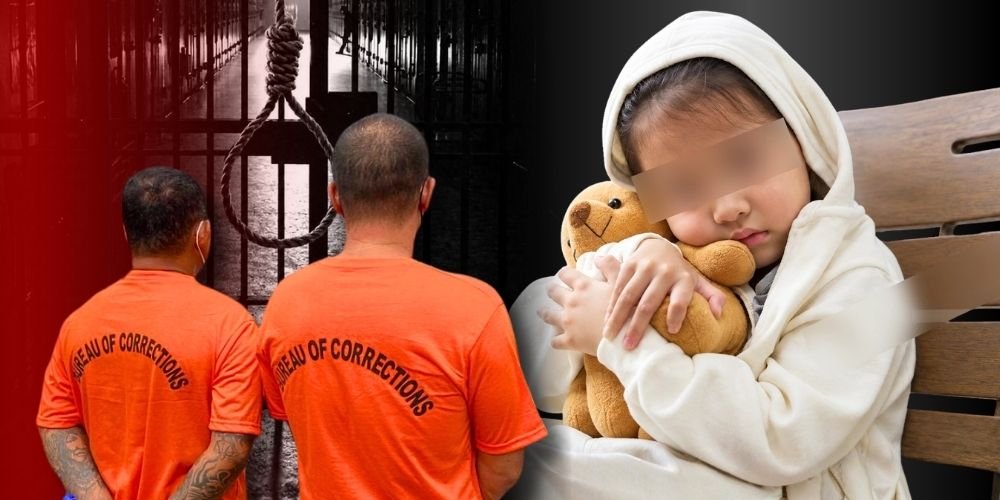
Should the Philippines reconsider harsher penalties for child rape and sexual exploitation? U.S. Republican Nancy Mace is pushing H.R. 7702, the “Death Penalty for Child Rapists Act,” which would make capital punishment available for several federal sex offenses against children.
Filed Feb. 25, the bill would cover aggravated sexual abuse of a child, sexual abuse of a minor and specified abusive sexual-contact offenses. A death sentence would not be automatic and would still require prosecutors to pursue it through capital sentencing.
“Rape a child and you don’t get a second chance, you get the death penalty,” Mace said.
In the Philippines, PGMN Contributor Breanna Espina has examined the scale of child exploitation. International Justice Mission and the University of Nottingham Rights Lab estimated nearly 500,000 Filipino children were trafficked to produce child sexual exploitation material in 2022, or about one in every 100 children.
Earlier IJM analysis found a median victim age of 11, with 9% aged 3 or younger. Among victims whose relationship with their trafficker was known, 83% were exploited by family members.
The abuse can also be financed from abroad. In February, an Oregon man was sentenced to more than 21 years after prosecutors said he paid traffickers in the Philippines for livestreamed sexual abuse involving children as young as 3.
The Philippines already imposes severe penalties under Republic Act No. 11930, which criminalizes producing or directing child sexual abuse material, paying for livestreamed abuse and trafficking children for exploitation. Several violations carry life imprisonment and fines of at least ₱2 million.
Capital punishment has been prohibited in the Philippines since 2006 under Republic Act No. 9346.
Mace’s bill faces a constitutional hurdle in the U.S. In Kennedy v. Louisiana, the Supreme Court ruled in 2008 that the Eighth Amendment bars execution for child rape when the victim is not killed.
H.R. 7702 remains pending. For the Philippines, the broader question is how punishment, prevention, survivor protection, financial tracing and cross-border enforcement can work together against child sexual exploitation.