


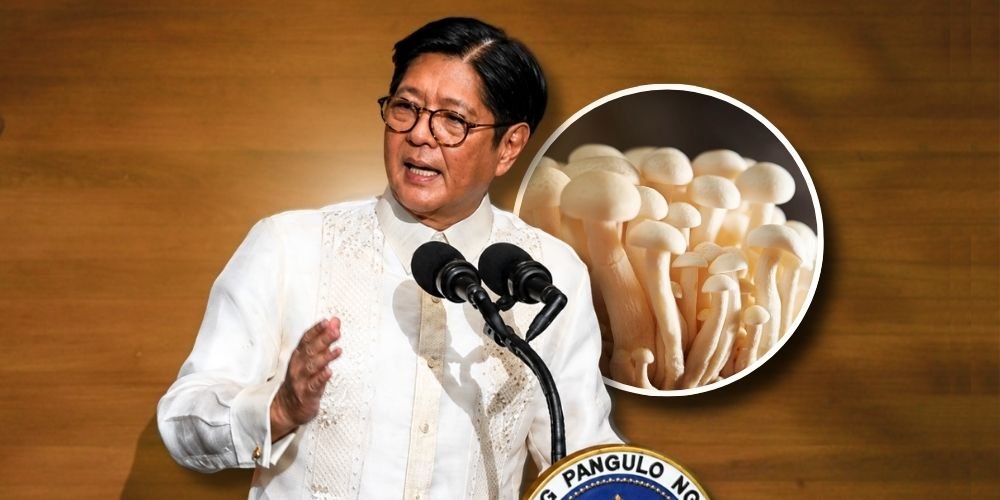
President Bongbong Marcos’s recognition of enoki mushrooms in his fifth State of the Nation Address has gained fresh momentum as the Department of Agriculture moves to expand local production and explore overseas markets for the specialty crop.
During his July 27 address, Marcos cited enoki while discussing the export competitiveness of Philippine agricultural products such as ube, coconut, bananas and other tropical fruits.
“And we have now ventured into new and viable ones, like enoki mushrooms,” Marcos said.
Agriculture Secretary Francisco Tiu Laurel Jr. said the Philippines has the land and capability to increase production and serve markets where demand for enoki is growing.
“If we can produce more because I think we have the land, we have the capability, nandiyan ang Korea, nandiyan Hong Kong,” Tiu Laurel said.
The DA also identified Singapore, parts of China and the Middle East as potential destinations for Philippine-grown enoki.
According to Tiu Laurel, the Philippines imports about 6,200 metric tons of enoki mushrooms annually to meet domestic demand. He also expects local consumption to increase as more Filipinos discover different ways to prepare the mushroom.
Enoki is now commercially cultivated in a climate-controlled facility in Silang, Cavite. The operation allows the mushroom to be produced locally despite the country’s tropical climate and offers an alternative to imported supply.
Tiu Laurel said only one modern facility currently produces enoki commercially in the Philippines, leaving room for more farmers and agricultural entrepreneurs to enter the industry. Interested producers may seek financing through regular agricultural credit programs managed by the Agricultural Credit Policy Council.
With Marcos placing enoki in the national spotlight and the DA exploring foreign buyers, the locally grown mushroom is emerging as a potential new addition to the Philippines’ agricultural exports.