

Peanut Gallery Media Network
  • Home
  • News
    • Investigations
    • Politics
    • Law
    • Voices
    • World Affairs
  • Business
    • Careers
    • Creators
    • Markets
    • Real Estate
    • Startups
  • Culture
    • Entertainment
    • Fashion
    • Food
    • Music
    • Pageants
    • Travel
    • Wellness
  • Contact Us
  • Shop
No Result
View All Result
Peanut Gallery Media Network
  • Home
  • News
    • Investigations
    • Politics
    • Law
    • Voices
    • World Affairs
  • Business
    • Careers
    • Creators
    • Markets
    • Real Estate
    • Startups
  • Culture
    • Entertainment
    • Fashion
    • Food
    • Music
    • Pageants
    • Travel
    • Wellness
  • Contact Us
  • Shop
Peanut Gallery Media Network
No Result
View All Result

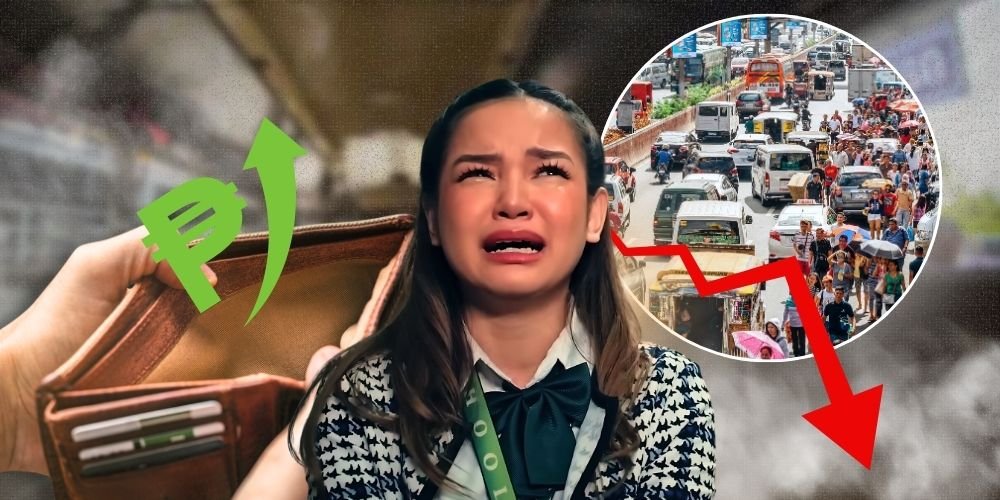
How commute misery became part of daily life in the Philippines

Emmanuel Lynx by Emmanuel Lynx
August 12, 2025
in Explains, PGMN
0
How commute misery became part of daily life in the Philippines
80
SHARES
1.3k
VIEWS
Share on FacebookShare on Twitter

Why does getting to work in the Philippines feel like running a marathon you never signed up for?

You might also like

750,000 FACEBOOK FOLLOWERS

2.5 Million Views in Four Days—Mabanta vs Romualdez ep on pace to be most viral PGMN ep of all time

PGMN Lead Anchor CJ Hirro Re-Releases New Limited Edition Version of Ultra-Viral Corruption Exposé vs Martin Romualdez after YouTube takedown

In cities like Metro Manila, a “short” commute can swallow hours, eroding sleep, family time, and sanity along the way.

Traffic isn’t just an inconvenience—it’s a structural flaw baked into decades of poor planning, car-centric policies, and a public transport system that’s barely holding together.

We call it “normal,” but when an entire nation schedules life around gridlock, maybe the real question is: how did misery become a standard part of the ride?

A journey that ends before it begins

Thousands of Metro Manila workers leave home early, hoping to return before night. Yet the commute has stretched from under an hour one-way decades ago, to 3–4 hours each way today.

Surveys reveal that many commuters now allocate half their waking hours just to travel between home and work or a commuter advocacy poll confirms three-hour one-way trips. A 2023 study ranked Metro Manila the most congested city globally, where traveling just 10 km can take over 25 minutes.

Even farther south, Davao—though smaller—suffers: one report found it takes 33 minutes to go 10 km during peak periods; the city officially questioned that measure, but the statistics echo a growing national problem.

Why brushing teeth first becomes a privilege

What once took roughly 37 minutes in 1980 and 51 minutes in 1996, now balloons to hours of transit before the day even begins. This rise stems from several converging factors.

First, explosive population and vehicle growth outpaced the city’s infrastructure expansion. Rapid growth in the 2010s saw population and vehicle numbers soar, yet roads and rail haven’t kept pace. Built for fewer vehicles, key arteries like EDSA now carry well beyond capacity—some studies report up to 7,500 vehicles per hour per direction, against a design limit of around 6,000.

Moreover, while private cars make up just under one-third of trips, they occupy nearly 78 % of road space; buses and jeepneys carry most commuters yet consume minimal space.

Why public transport feels more like a myth

Shockingly, the rail system—LRT-1, LRT-2, MRT-3—services fewer passengers now than in 2014, thanks to breakdowns, maintenance deficits, and underinvestment.

This leaves millions dependent on privately operated jeepneys, buses, tricycles, and vans—supply too low, crowding too intense, and schedules too unpredictable. A 2022 survey found 79 % of commuters saying wait times are “usually too long,” and 96 % reporting a shortage of buses and jeepneys.

Thus, a broken public transport system forces many into private cars or motorcycles, further overcrowding roads. That vicious cycle is a key reason commuting has become synonymous with exhaustion.

Why traffic steals your day—and your mind

Long commutes aren’t just time-draining—they erode quality of life. Many workers now endure trips so lengthy that they lose hours meant for rest, meals, family, or sleep. One commuter said getting home at 10 p.m. leaves “just craving sleep rather than food.” Another described daily transit as a second unpaid shift.

These grueling routines raise stress, hinder job performance, and damage mental and physical health. Institutions like the Trade Union Congress of the Philippines confirm that commutes that stretch three hours one-way slash the window for well-being and productivity.

Economically, the cost is staggering: JICA estimated Manila’s congestion wastes ₱3.5 billion per day in fuel and lost productivity, with projections hitting ₱5.4 billion daily by 2035 unless nothing changes.

Why this isn’t just a Manila problem

Other cities mirror Metro Manila’s fate. In Metro Cebu, daily gridlock is so persistent the term “perennial problem” is routinely used. Narrow roads and rising vehicle counts, with no expansion in road space, make the traffic situation worse. Bus Rapid Transit (BRT) systems are finally under construction, but experts warn a BRT alone won’t solve congestion without broader transport promotion.

In Davao, despite attempts to downplay traffic severity, the city consistently winds up ranked among the most congested globally, attesting to an emerging pattern: worsening space-to-vehicle ratios in major Philippine cities.

Why government programs don’t make traffic disappear—yet

The “Build, Build, Build” initiative brought new roads, bridges, and public transit systems to the pipeline. Projects like the Metro Manila Subway and the North–South Commuter Railway aim to radically expand rail capacity. Meanwhile, existing lines like LRT-1 and LRT-2 are being upgraded, and MRT-3 is being rehabilitated.

To shift commuters from private to public, there’s an emphasis on better bus routes, intermodal terminals, and smart traffic systems—with Japanese assistance pushing modernization. The Jeepney Modernization Program, controversial yet ongoing, aims to replace old jeeps with newer, cleaner vehicles—though it risks reducing ride availability if not handled with care.

Policy tools like the Telecommuting Act and staggered work hours—pushed especially during the pandemic—seek to ease rush hour pressure. Some private firms even run shuttle services for employees to reduce reliance on public transport.

Why relief remains elusive

Despite these efforts, the daily ordeal remains entrenched. Many infrastructure projects are still years from completion. Interim measures—like occasional free bus rides or expanded number-coding windows—offer small comfort rather than systemic relief.

Political hurdles and interagency coordination bottlenecks delay progress.

Experts agree: without integrated urban planning, efficient mass transit, and demand-management tools (like congestion pricing or better cycling infrastructure), traffic will only deepen. ADB has urged cities to become walkable and transit-oriented—less highway-centric—and some pandemic-era bike lane expansions show promise.


Tags: commutinginfrastructureMetro Manilapublic transporttraffic
Share32Tweet20
Emmanuel Lynx

Emmanuel Lynx

Recommended For You

750,000 FACEBOOK FOLLOWERS

by PGMN Staff
June 15, 2026
0
Bong Go Calls for Clarification After Widow Questions PhilHealth Benefit Denial

Peanut Gallery Media Network has surpassed 750,000 followers on Facebook, reaching another major milestone just 19 months after the media platform began operations. The milestone reflects growing public...

Read moreDetails

2.5 Million Views in Four Days—Mabanta vs Romualdez ep on pace to be most viral PGMN ep of all time

by PGMN Staff
June 15, 2026
0
2.5 Million Views in Four Days—Mabanta vs Romualdez ep on pace to be most viral PGMN ep of all time

PGMN Founder and CEO Franco Mabanta has scored one of the fastest-growing audience responses in Peanut Gallery Media Network history after releasing a more than two-hour episode on...

Read moreDetails

PGMN Lead Anchor CJ Hirro Re-Releases New Limited Edition Version of Ultra-Viral Corruption Exposé vs Martin Romualdez after YouTube takedown

by PGMN Staff
June 15, 2026
0
2.5 Million Views in Four Days—Mabanta vs Romualdez ep on pace to be most viral PGMN ep of all time

PGMN Anchor CJ Hirro's latest investigative episode examining the House of Representatives' budgeting process under former House Speaker Martin Romualdez has generated nearly 500,000 combined views across Facebook...

Read moreDetails

ROMUALDEZ SEEN HAVING MERIENDA IN BGC

by PGMN Staff
June 15, 2026
0
US, Iran Move Toward War-Ending Deal; Hormuz Reopening Could Ease Global Fuel Pressure

Former House Speaker and Leyte 1st District Rep. Martin Romualdez was recently spotted at Mitsukoshi Mall in Bonifacio Global City, according to photos circulating online. The images show...

Read moreDetails

PGMN’s YouTube channel crosses 300,000 subs at breakneck speed—19 months after publishing first video

by PGMN Writer
June 1, 2026
0

Peanut Gallery Media Network has turned YouTube into one of its strongest digital platforms, growing its official channel to more than 300,000 subscribers just 19 months after releasing...

Read moreDetails

Follow PGMN

Popular Stories

  • After Terrorizing Boracay, Vitaly is in Manila Harassing People Around BGC

    After Terrorizing Boracay, Vitaly is in Manila Harassing People Around BGC

    318 shares
    Share 127 Tweet 80
  • Baste Duterte goes after Marcos cabinet over Rodrigo Duterte’s ICC arrest

    311 shares
    Share 124 Tweet 78
  • The Song of a Fallen Alliance: What Digong’s ‘MacArthur Park’ Message to VP Sara Means

    252 shares
    Share 101 Tweet 63
  • ROMUALDEZ SEEN HAVING MERIENDA IN BGC

    242 shares
    Share 97 Tweet 61
  • “Resign ka na!” scorned gay netizen Robby Tarroza threatens to expose the private parts of Senator Estrada’s life

    187 shares
    Share 75 Tweet 47
  • Trending
  • Comments
  • Latest
After Terrorizing Boracay, Vitaly is in Manila Harassing People Around BGC

After Terrorizing Boracay, Vitaly is in Manila Harassing People Around BGC

April 3, 2025
Baste Duterte goes after Marcos cabinet over Rodrigo Duterte’s ICC arrest

Baste Duterte goes after Marcos cabinet over Rodrigo Duterte’s ICC arrest

September 15, 2025
The Song of a Fallen Alliance: What Digong’s ‘MacArthur Park’ Message to VP Sara Means

The Song of a Fallen Alliance: What Digong’s ‘MacArthur Park’ Message to VP Sara Means

February 7, 2025
US, Iran Move Toward War-Ending Deal; Hormuz Reopening Could Ease Global Fuel Pressure

ROMUALDEZ SEEN HAVING MERIENDA IN BGC

June 15, 2026
Democratic Party Shuffle Only Enrages US Citizens

Democratic Party Shuffle Only Enrages US Citizens

3
Sandiganbayan marcos

Sandiganbayan Drops Civil Case Against Marcos Estate

0
Olivia Rodrigo Philippines

Olivia Rodrigo Pledges Net Profits from Philippines Concert to Charity

0
2024 Philippine Airlines

2024 Philippine Airlines Direct Flights: Every City You Can Travel To

0

“Hindi aksidente.” CIDG examines homicide, hazing angles in Ateneo drowning case

June 17, 2026

57% of Filipinos ready to move abroad for better opportunities

June 17, 2026

Elon Musk’s net worth skyrocketed today to US$1.4 trillion

June 17, 2026

Ramon Tulfo named in Maleta scandal by 18 former Marines

June 17, 2026
Peanut Gallery Media Network

PGMN

© 2026 PGMN - Peanut Gallery Media Network. All Rights Reserved. | Privacy Policy

No Result
View All Result
  • Home
  • News
    • Investigations
    • Politics
    • Law
    • Voices
    • World Affairs
  • Business
    • Careers
    • Creators
    • Markets
    • Real Estate
    • Startups
  • Culture
    • Entertainment
    • Fashion
    • Food
    • Music
    • Pageants
    • Travel
    • Wellness
  • Contact Us
  • Shop

© 2026 PGMN - Peanut Gallery Media Network. All Rights Reserved. | Privacy Policy

Are you sure want to unlock this post?
Unlock left : 0
Are you sure want to cancel subscription?