Months after El Niño began, the Philippine Atmospheric, Geophysical and Astronomical Services Administration (DOST-PAGASA) expects it to strengthen further. It may become “very strong” by late 2026 and persist into early 2027, increasing risks to water and agriculture.
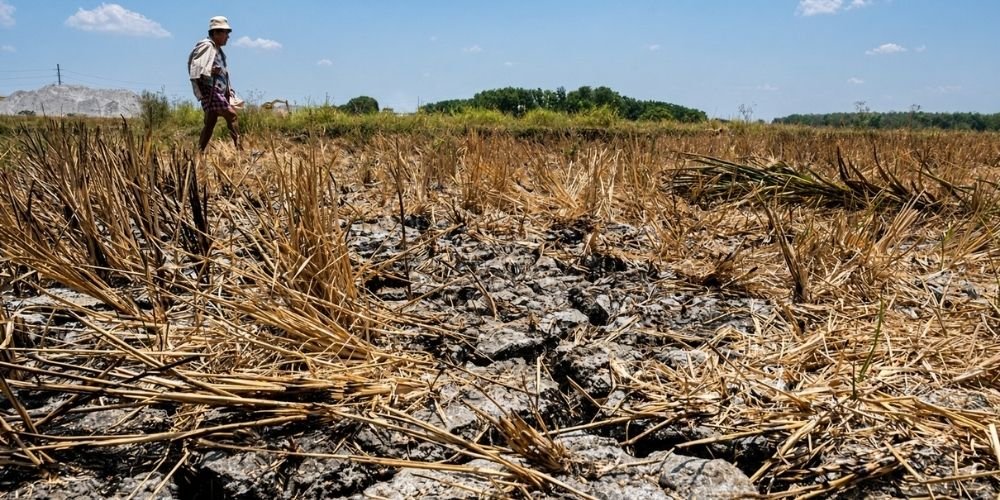
Starting in October, about 45 provinces may experience below-normal rainfall, while eight could enter drought. PAGASA expects conditions to worsen from January to March 2027 as more areas lose rainfall.
El Niño develops when parts of the tropical Pacific Ocean become unusually warm and disrupt normal weather patterns. In the Philippines, this usually means less rain, hotter conditions, and greater pressure on water supplies.
PAGASA calls an El Niño “very strong” when ocean temperatures stay more than 2°C above normal for three months. Climate officials said the current episode shows unusually intense warming both at the ocean surface and below it.
Less rainfall can reduce farm output, weaken livestock production, and lower water available in reservoirs and irrigation systems. PAGASA is urging communities and local governments to prepare before conditions become more severe.
Recommended measures include conserving water, adjusting planting schedules, protecting critical infrastructure, and preparing essential services for prolonged dry periods.
Separate Climate Impact Lab projections also warn that stronger El Niño conditions could increase heat-related deaths worldwide. Researchers estimate 451,000 additional heat deaths globally from June through February.