

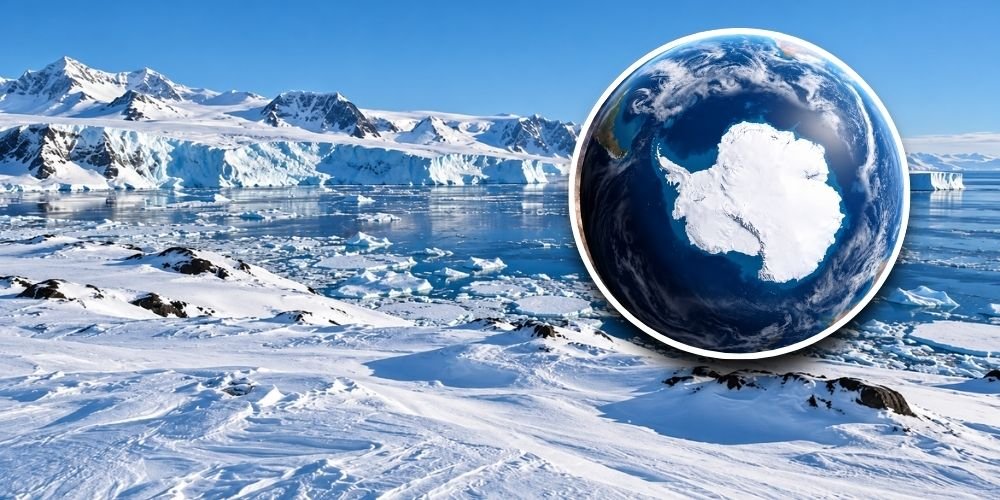
Despite the continued rise in global temperatures, Antarctica recently experienced an increase in ice mass as exceptionally heavy snowfall blanketed its eastern region. Scientists linked the surge to warmer tropical waters that altered atmospheric circulation and transported large amounts of moisture toward Antarctica.
From 2021 to 2023, East Antarctica added roughly 695 billion tons of ice, marking the largest increase recorded by GRACE satellite missions. The temporary gain interrupted the continent’s decades-long trend of significant ice loss.
The Institute of Oceanology of the Chinese Academy of Sciences, or IOCAS, led the research, which was published Aug. 19 in the journal Nature. Researchers combined gravity measurements from satellites with ice-core snowfall data, atmospheric models and simulations tracking water vapor.
The researchers identified sustained warming in the tropical western Pacific near the eastern Indian Ocean as the primary trigger. The warmer waters produced atmospheric waves that traveled thousands of miles, reshaping circulation patterns over East Antarctica.
That atmospheric shift strengthened the flow of moisture from the Indian Ocean toward Queen Mary Land and Wilkes Land. Atmospheric rivers then transported the moisture southward, triggering prolonged periods of heavy snowfall that added significant amounts of ice.
The study found that human-caused climate forcing was responsible for only 9% of the snowfall anomaly. Instead, researchers attributed the unusual ice gain primarily to warming in the tropical oceans and the atmospheric circulation changes that followed.
“We found a previously underrecognized ‘tropical warm pool-East Antarctic Ice Sheet’ teleconnection pathway,” Yunhe Wang, the study’s first author, said.
The pathway helps explain how conditions in distant tropical oceans can affect snowfall and ice accumulation in Antarctica over several years.
NASA data indicate that Antarctica lost about 135 billion tons of ice each year from 2002 through 2025. The losses added an estimated 0.4 millimeters annually to global sea-level rise.