


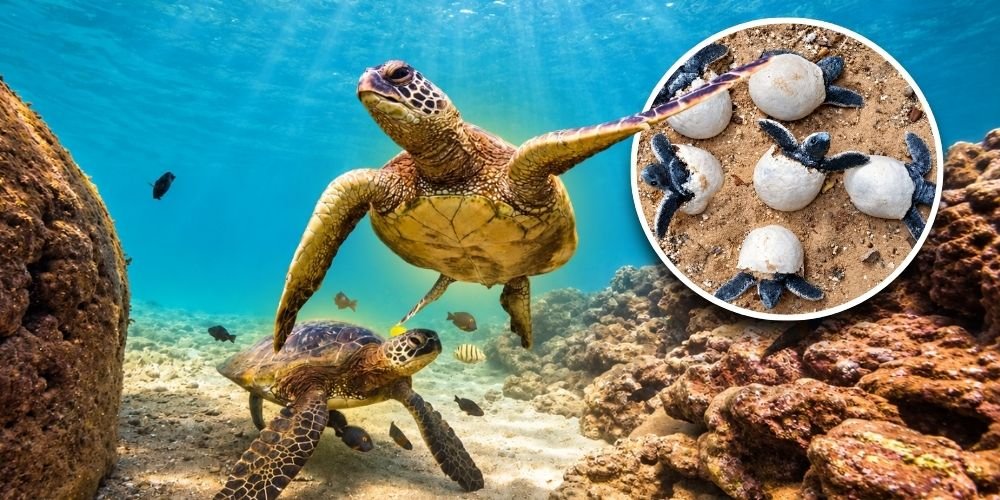
The Green Sea Turtle has moved from Endangered to Least Concern on the International Union for Conservation of Nature’s global Red List, marking a major turnaround for a species once pushed into steep decline by hunting, egg collection and habitat loss.
Its worldwide population is now estimated to be about 28% larger than in the 1970s, with protections for nesting females and eggs, restrictions on harvesting and trade, community programs and measures that reduced accidental deaths in fishing gear helping drive the rebound.
The IUCN announced the global reclassification in October 2025 after more than four decades of listing the species as Endangered.
Some of the strongest recoveries have been recorded in Ascension Island, Brazil, Mexico and Hawai‘i. In Florida, green turtle nesting increased from roughly 4,000 nests in the 1980s to more than 230,000 during the 2010s.
The comeback carries added weight because green turtles reproduce slowly and can take decades to reach maturity. Their recovery therefore reflects gains built across generations, not a short-term population spike.
The global reclassification does not mean every green turtle population is secure. Several regional populations remain Vulnerable, Near Threatened or Endangered, while illegal hunting, fishing bycatch, coastal development, marine debris, vessel strikes, rising seas and warming temperatures continue to threaten the species.
That distinction matters in the Philippines, where green sea turtles remain officially classified as Endangered under Department of Environment and Natural Resources rules and continue to receive protection under the Wildlife Resources Conservation and Protection Act.
The IUCN assessment measures extinction risk across the species’ global range and does not override national or regional classifications based on local conditions.
Even with that qualification, the shift is a measurable global gain. Green turtle numbers have recovered enough over decades to leave the IUCN’s threatened categories, while continued protection remains essential to prevent those gains from being reversed.