

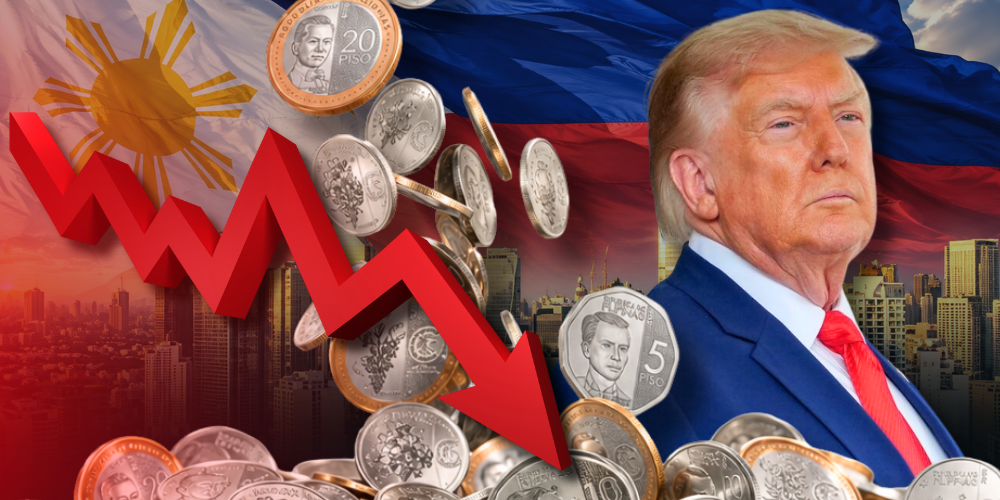
The Philippine peso plunged to a new historic low of ₱63.95 against the U.S. dollar on Monday, Oct. 26, falling just five centavos short of the ₱64 mark as rising global oil prices, a stronger dollar, and mounting economic uncertainties continued to pressure the local currency.
The peso weakened by 33.5 centavos from its previous record-low closing rate of ₱63.615 on Friday, Oct. 23, marking its 32nd record-low finish in 2026. Despite opening at ₱63.535, the currency steadily lost ground throughout the trading session.
The decline comes amid renewed geopolitical tensions in the Middle East, which have driven international oil prices higher and strengthened demand for the U.S. dollar. These developments have placed additional pressure on the Philippines, which relies heavily on imported petroleum products.
Chinabank chief economist Domini Velasquez attributed the peso’s latest weakness partly to rising oil prices and renewed concerns over possible U.S. military action against Iran, both of which have strengthened the dollar.
The depreciation continued despite the Bangko Sentral ng Pilipinas (BSP) raising its benchmark interest rate by 50 basis points to 5.50% on Oct. 22, its fourth consecutive rate increase.
The BSP said the adjustment was intended to contain inflationary pressures and prevent expectations of further price increases from becoming entrenched. However, global economic developments have continued to weigh on the peso.
For ordinary Filipinos, a weaker peso could mean higher prices for imported fuel, food, medicines, and other essential commodities. Since many imported products are purchased in dollars, businesses may face higher costs that could eventually be passed on to consumers.
Higher fuel prices could also affect transportation fares, electricity costs, and the distribution of basic goods, adding pressure to household budgets already struggling with inflation.
The weaker currency also increases the peso equivalent of dollar-denominated debt payments, potentially raising costs for businesses and the government.
However, overseas Filipino workers and families receiving dollar-denominated remittances may benefit from the exchange rate, as each dollar sent home can be converted into more pesos. Exporters earning in foreign currencies could also gain, although higher import and production costs may offset those benefits.
The peso’s prolonged weakness has raised concerns over its potential impact on inflation, purchasing power, and the country’s broader economic stability.
While reaching ₱64 per dollar would represent another significant milestone, economists emphasize that prolonged currency depreciation and its effects on consumer prices are more important than any single exchange-rate threshold.
With the peso closing at ₱63.95, attention now turns to whether the BSP’s monetary measures and changing global market conditions can help stabilize the currency or whether the Philippine peso will continue setting new historic lows.